
Wired vs. Wireless: Which Is the Best Fit for RV Backup Cameras?
When managing a fleet of RVs, every decision about safety equipment carries real consequences for drivers, passengers, and your bottom line. We have spoken with countless fleet operators who struggle with one persistent question: should we invest in traditional wired RV backup cameras or embrace newer wireless technology? Both approaches have merits, but the answer depends entirely on your operational priorities. As a manufacturer of both technologies, we have observed how the right choice can reduce accidents and lower installation costs. Let us break down the trade-offs.
The Case for Wired RV Backup Cameras: Reliability Without Compromise
For decades, the wired RV backup camera has been the industry standard. A direct cable connection between camera and monitor offers consistent, interference-free video transmission. There is no risk of signal dropouts from nearby wireless devices or physical obstructions. In large RV fleets where vehicles travel through varied terrain and crowded campgrounds, that reliability appeals to safety managers. However, we must also acknowledge the downsides. Running video cables through the length of an RV—especially retrofitting older units—requires professional installation, significant labor hours, and occasionally drilling through walls. For fleet owners managing dozens of RVs, these installation costs add up quickly. The wired RV backup camera remains a solid choice for operators who prioritize absolute signal stability and already have existing wiring infrastructure.
Why the WiFi Backup Camera System Is Transforming RV Fleet Operations
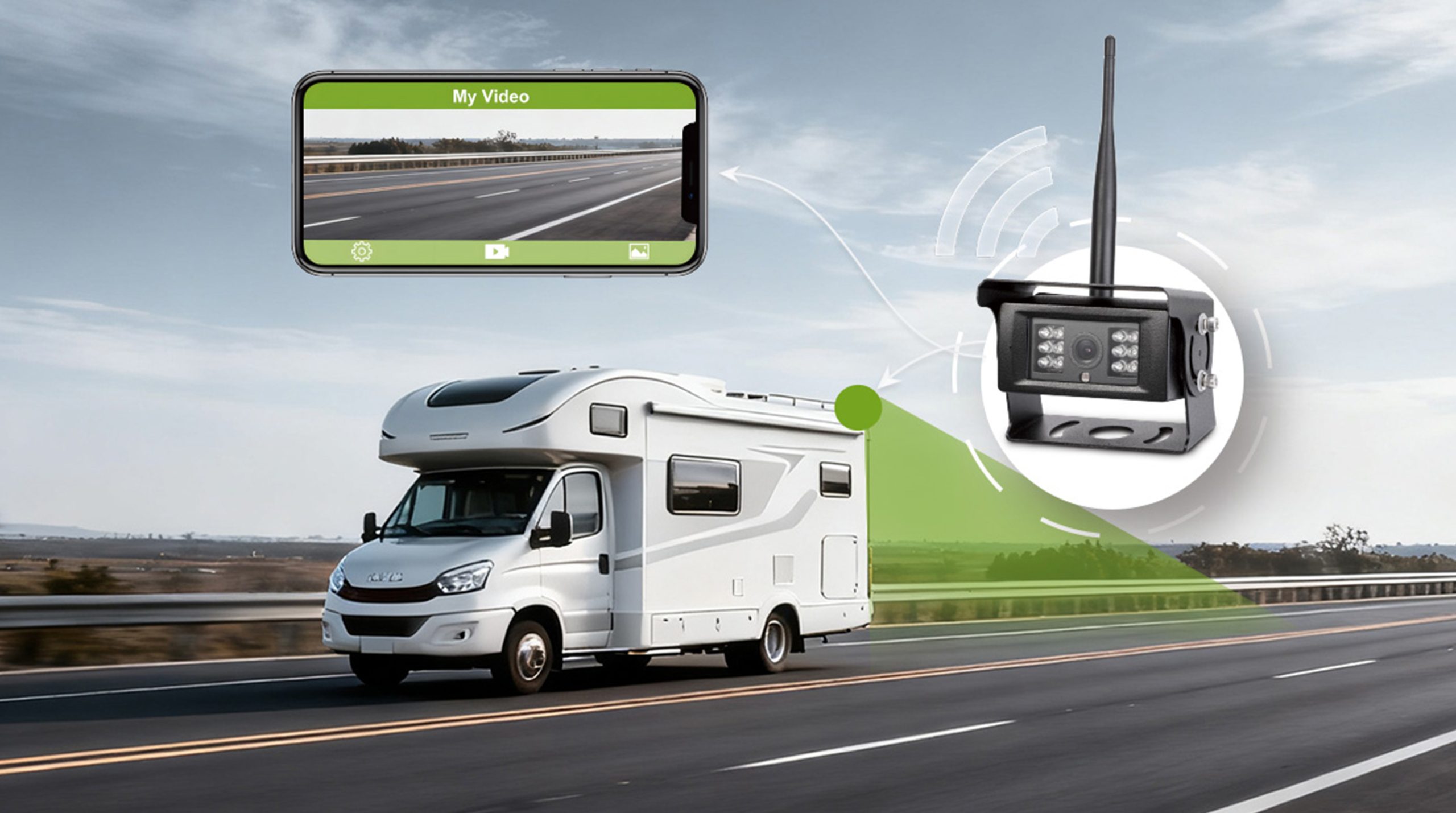
Recently, we have seen a dramatic shift toward wireless solutions. The Sistema de cámara de seguridad WiFi eliminates the need for long video cables running from rear bumper to dashboard. With a built-in WiFi module, our system streams live video directly to smartphones or compatible monitors. For RV fleets, this means no permanent monitor installation in each cab—drivers can use their own devices. We designed this WiFi backup camera system to deliver clear, high-resolution visuals with negligible delay, so what you see accurately mirrors the scene behind your vehicle. Even in tight campsites or low-visibility conditions, drivers gain much better situational awareness. Perhaps most valuable for fleet managers: installation takes minutes, not hours. Minimal wiring and no specialist tools mean you can deploy the system across your entire RV fleet at a fraction of the cost of wired alternatives. The ability to play back recorded images and download video clips directly to a mobile device also turns the system into a documentation tool for incident review and driver training.
Making the Right Choice for Your RV Fleet
So which path should you take? From our experience working with RV rental companies, tour operators, and commercial fleet owners, we recommend the WiFi backup camera system for most modern applications. The ease of installation, lower upfront labor costs, smartphone integration, and ultra-low latency performance now rival traditional wired setups. The only scenario where we still specify a wired RV backup camera is when vehicles operate in environments with extreme wireless interference or when a dedicated, fixed in-dash monitor is a non-negotiable client requirement. For everyone else, wireless offers the smarter balance of safety, simplicity, and scalability.
En Luview, we manufacture both wired and wireless solutions, but we proudly recommend our WiFi backup camera system for RV fleets seeking fast deployment and proven reliability. Contact us today—let us help you equip your RVs with the right technology for safer roads and smarter operations.