
Rétroviseurs numériques avec caméra de recul 1080P : Qualité d'image et performance
Alors que les réglementations en matière de sécurité des véhicules et les environnements de conduite continuent d'évoluer, la vision arrière numérique est devenue un sujet important pour les opérateurs de flottes et les intégrateurs de systèmes automobiles. À l'heure actuelle Luview, Dans le cadre du projet "Rétroviseur", nous nous concentrons sur le développement de solutions de rétroviseurs numériques qui améliorent la visibilité à l'arrière tout en répondant aux exigences des véhicules utilitaires du monde réel. Un système de rétroviseur à caméra remplace ou améliore les rétroviseurs optiques traditionnels en utilisant des caméras haute définition et des écrans dans l'habitacle, ce qui permet aux conducteurs d'avoir un champ de vision plus large et plus cohérent. Lorsqu'ils sont associés à un rétroviseur avec caméra de recul, les rétroviseurs numériques permettent une marche arrière plus sûre et une meilleure connaissance de la voie, en particulier pour les véhicules dont les vitres arrière sont limitées ou dont l'espace de chargement est obstrué.
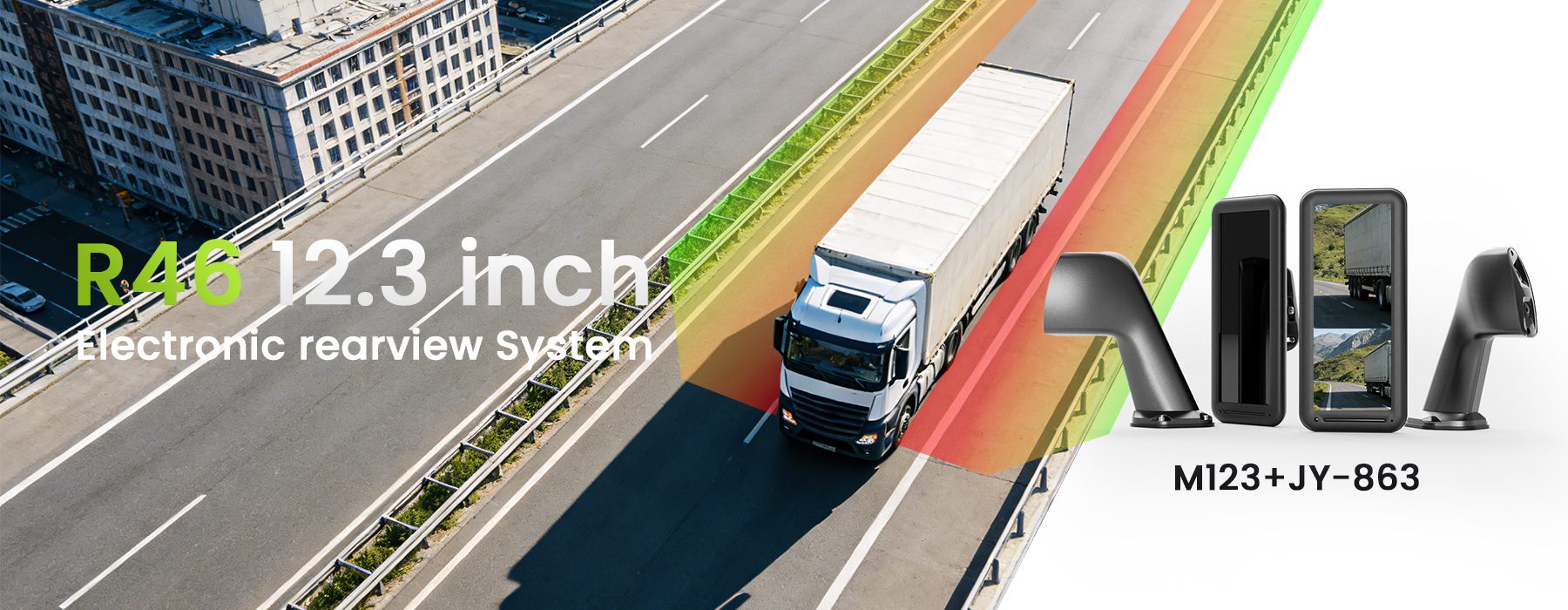
Considérations sur la qualité de l'image pour les rétroviseurs numériques
La clarté de l'image est l'un des facteurs les plus importants lors de l'évaluation d'une solution de rétroviseur numérique. Dans un système de caméra de rétroviseur, la résolution affecte directement la clarté avec laquelle les conducteurs peuvent reconnaître les véhicules, les piétons et les marquages routiers à différentes distances. Notre rétroviseur électronique de 12,3 pouces, certifié UN ECE R46, intègre une caméra 1080P pour fournir une image stable dans des conditions d'éclairage variables. Par rapport aux solutions analogiques, un rétroviseur à caméra de recul utilisant la transmission numérique réduit la distorsion et maintient une luminosité constante en cas de conduite de nuit ou de fort contre-jour. La conception de l'écran à double vue permet également aux conducteurs de basculer entre la vision arrière complète et les vues combinées sans encombrer l'écran, ce qui est important pour les conducteurs professionnels qui dépendent d'un jugement visuel rapide.
Performance et intégration du système dans le fonctionnement quotidien
Au-delà de la résolution de l'image, les performances du système dépendent de la stabilité du signal, de la réponse de l'écran et de la fiabilité à long terme. Dans notre processus de développement, nous concevons chaque système de caméra de rétroviseur pour qu'il réponde aux exigences réglementaires tout en permettant un fonctionnement continu dans les véhicules commerciaux. Le système de rétroviseur numérique de 12,3 pouces prend en charge l'affichage en temps réel avec une latence minimale, garantissant que le retour visuel reste synchronisé avec le mouvement du véhicule. Une caméra de rétroviseur correctement configurée caméra de recul avec rétroviseur Les rétroviseurs numériques peuvent également réduire les zones aveugles par rapport aux rétroviseurs traditionnels, en particulier sur les véhicules de grande taille. Chez Luview, nous prenons en compte la flexibilité d'installation et la compatibilité avec les plates-formes de véhicules existantes, ce qui aide les intégrateurs de systèmes à déployer des rétroviseurs numériques sans modifier inutilement les structures d'origine des véhicules.
Conclusion : Évaluation des miroirs numériques à usage professionnel
Lorsqu'ils évaluent des rétroviseurs numériques équipés d'une caméra de recul 1080P, les acheteurs expérimentés doivent se concentrer sur la qualité de l'image, les performances d'affichage et la conformité plutôt que sur les allégations marketing. Un rétroviseur bien conçu système de caméra dans le rétroviseur améliore la cohérence de la visibilité arrière, tandis qu'un rétroviseur avec caméra de recul fiable permet de faire marche arrière en toute sécurité dans des environnements complexes. En combinant une conception certifiée, une imagerie claire et des dispositions d'écran pratiques, les solutions de rétroviseurs numériques peuvent soutenir les tâches de conduite quotidiennes sans ajouter de complexité opérationnelle. Ces facteurs sont essentiels pour les applications commerciales et de flotte où la stabilité des performances est importante tout au long du cycle de vie du véhicule.