Luview Fire Drill: Enhancing Safety Awareness and Effectively Responding to Fires缩略图

Luview Fire Drill: Enhancing Safety Awareness and Effectively Responding to Fires

In December, Luview organized a crucial fire drill. The objective of this event was to familiarize employees with emergency evacuation routes, acquaint them with the locations of fire extinguishers and firefighting equipment, and enhance their ability to respond to fires. By participating in this drill, we can adeptly master the procedural steps to be taken in the event of a fire, thereby minimizing potential hazards to the greatest extent possible.

Luview Fire Drill: Enhancing Safety Awareness and Effectively Responding to Fires插图

During the drill, we placed particular emphasis on training for the use of fire extinguishers. Understanding fire safety knowledge is crucial as it enables us to identify signs of a fire, comprehend the ways in which fires can spread, and take appropriate actions to extinguish them. We delved into comprehensive learning on the correct usage of fire extinguishers, gaining proficiency in the operational procedures of these devices.

Luview Fire Drill: Enhancing Safety Awareness and Effectively Responding to Fires插图1


Additionally, we provided a comprehensive explanation of and practical demonstrations on the use of firefighting water hoses. As a crucial firefighting tool, the firefighting water hose is capable of delivering a powerful stream of water to extinguish large-scale fires. During the demonstration, we gained a thorough understanding of the structure and operational principles of firefighting water hoses, as well as the correct procedures for using them to combat fires in emergency situations.

Luview Fire Drill: Enhancing Safety Awareness and Effectively Responding to Fires插图2

Fire safety is the responsibility of each and every one of us. Let’s work together to create a safe and reliable workplace. Through such drill activities, we can better prepare for emergencies, enhance overall safety awareness, and ensure a secure environment for the company.

Luview Fire Drill: Enhancing Safety Awareness and Effectively Responding to Fires插图3

Guide to Choosing a Vehicle Backup Camera for License Plate缩略图

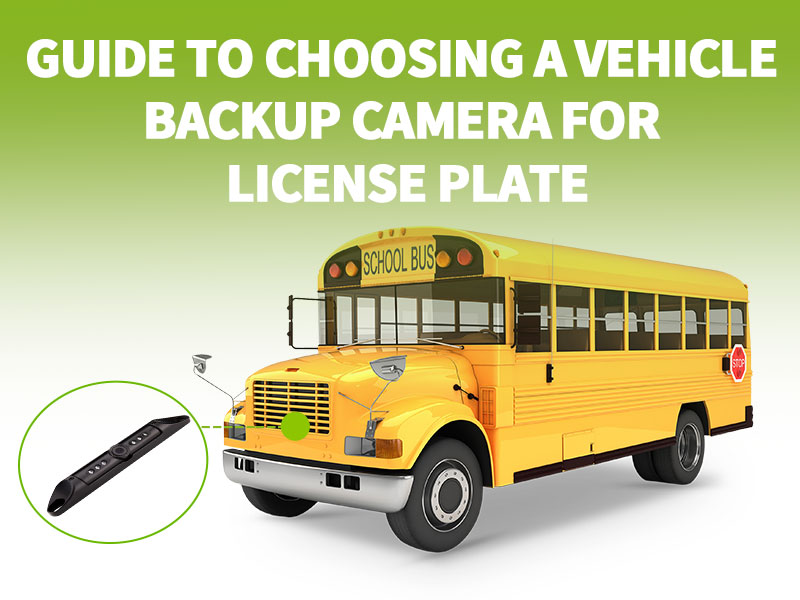
Guide to Choosing a Vehicle Backup Camera for License Plate

In the rapid evolution of modern vehicle safety technologies, the backup camera has emerged as a crucial auxiliary feature, significantly enhancing the safety and convenience of reversing. However, with a plethora of backup camera options available in the market, determining the ideal camera for license plate use has become a concern for many vehicle owners. In this article, we will delve into the selection criteria for choosing a vehicle backup camera specifically designed for license plate installation.

Guide to Choosing a Vehicle Backup Camera for License Plate插图

How to choose the right license plate backup camera

1. Comprehending the functionality of backup cameras

The backup camera is like a little assistant for the vehicle, especially when reversing. It solves the problem of blind spots that we cannot see from the rear, making reversing safer. By instantly delivering a clear rear view, it prevented us from accidentally bumping into things, especially in tight spots. Moreover, the night vision function also makes reversing at night easier and is no longer affected by darkness. Cameras also make parking easier, and we can more accurately judge and avoid obstacles. In general, backup cameras are meant to make driving safer and more convenient, and are part of modern vehicle safety.

2. The importance of resolution and clarity

The resolution and clarity of a license plate backup camera are crucial for driving safety. High resolution provides clear images, enabling drivers to accurately identify obstacles in the rear and reduce the risk of collisions. Clarity also plays a role during nighttime driving and in complex parking scenarios, offering drivers a more reliable spatial perception and simplifying parking maneuvers. This not only enhances the user experience but also provides drivers with reliable assistance during critical moments, making the reversing process safer and more convenient.

3. Consideration of night vision functionality

Night vision functionality is a critical consideration for license plate backup cameras, ensuring clear imaging in low-light or complete darkness through high-sensitivity sensors and infrared assistance. Contrast adjustment, anti-glare design, and real-time responsiveness are crucial to handle various lighting conditions during nighttime driving, providing reliable assistance for reverse maneuvers in the dark. This ensures drivers feel more secure and facilitates convenience during nighttime operations.

4. Installation difficulty and methods

Considering the installation of a camera, it is important to understand whether it requires professional installation services. Some cameras are designed to be easily installed by individuals, while others may require the expertise of professional technicians. If you have limited knowledge of the vehicle’s electrical system or encounter difficulties, it is advisable to seek professional technical support or installation services.

5. Selection of waterproof ratings

When choosing a license plate backup camera, the waterproof rating is a crucial consideration as it directly impacts its stability in different weather conditions. Common waterproof ratings include IP67, IP68, and IP69K, denoting resistance to water depth, water pressure, and high-temperature high-pressure water jets, respectively. In rainy or humid environments, it’s recommended to choose a camera with at least an IP67 rating. For situations requiring frequent washing or exposure to harsh conditions, considering a higher waterproof rating like IP69K might be more suitable. Therefore, it’s important to reasonably select the camera’s waterproof rating based on actual usage and environmental conditions to ensure reliable reverse assistance in various adverse situations.

6. The importance of angle of view and coverage area

When purchasing a license plate backup camera, the angle of view and coverage area are crucial factors to consider. The camera’s angle of view determines the visible range, and choosing an appropriate angle helps in comprehensively understanding the surrounding environment while reversing, reducing blind spots. A wide coverage area provides a clear view of the reversing zone. Therefore, paying attention to the camera’s angle of view and coverage area is key to enhancing reverse safety and convenience.

7. Choice between Wireless and Wired

When selecting a license plate backup camera, you face the choice between wireless and wired connectivity. Wireless cameras eliminate the need for complex wiring, simplifying the installation process and making it more flexible and convenient. However, wired cameras typically offer more stable signal transmission, avoiding potential issues caused by wireless signal interference. Therefore, the choice between wireless and wired involves balancing convenience and stability. It depends on individual preferences and specific needs to determine whether to opt for the convenience of wireless or the reliability of a wired connection.

8. Brand reputation and user reviews as reference

When selecting a license plate backup camera, brand reputation and user reviews are crucial considerations. Reliable brands typically ensure product quality, and user reviews provide practical feedback from actual users. In addition, it’s essential to pay attention to whether the camera’s features align with personal needs, such as high-definition image quality or night vision capabilities. Considering these factors collectively can help choose a camera that best suits the vehicle and specific usage scenarios.

9. Balancing cost and value for money

When choosing a license plate backup camera, it’s essential to strike a balance between cost and value for money. While some high-end cameras may offer more advanced features, they often come with a higher price tag. Therefore, consumers should consider their individual needs and budget, weighing the relationship between the camera’s performance, durability, and price. Focusing on value for money is advantageous for obtaining a practical and economical solution, ensuring that the camera enhances driving safety without imposing an excessive financial burden.

Luview License Plate Backup Camera

The Luview license plate camera boasts an expansive 150° field of view, a high waterproof rating of IP69K, and powerful night vision capabilities (5-10m infrared distance). Additionally, it supports mirror switching and guideline control functions, making it an invaluable assistant for drivers during the reverse process. The wide field of view reduces blind spots, and the high waterproof rating ensures normal operation even in extreme weather conditions. The night vision function enhances visibility during nighttime driving. The mirror switching and guideline control functions further elevate driving convenience, enabling drivers to execute reverse maneuvers with precision. With its unique design and powerful features, the Luview license plate camera creates a more secure and convenient driving experience for users, providing peace of mind and ease during every journey.

Conclusione

When selecting a backup camera for your vehicle, it is crucial to consider multiple key factors, including the camera’s resolution, night vision capabilities, installation method, waterproof rating, field of view, connection options, and brand reputation. Through a rational comparison and careful selection, you will be able to find a backup camera that perfectly suits your vehicle, significantly enhancing driving safety and providing a convenient reverse experience.

Luview is a professional Chinese supplier of license plate backup cameras. Feel free to contact us at sales@luview.com to obtain detailed information about our products, allowing you to gain a comprehensive understanding of our professional camera solutions.

Which Forklift Camera System is Right for You: Wireless or Wired?缩略图

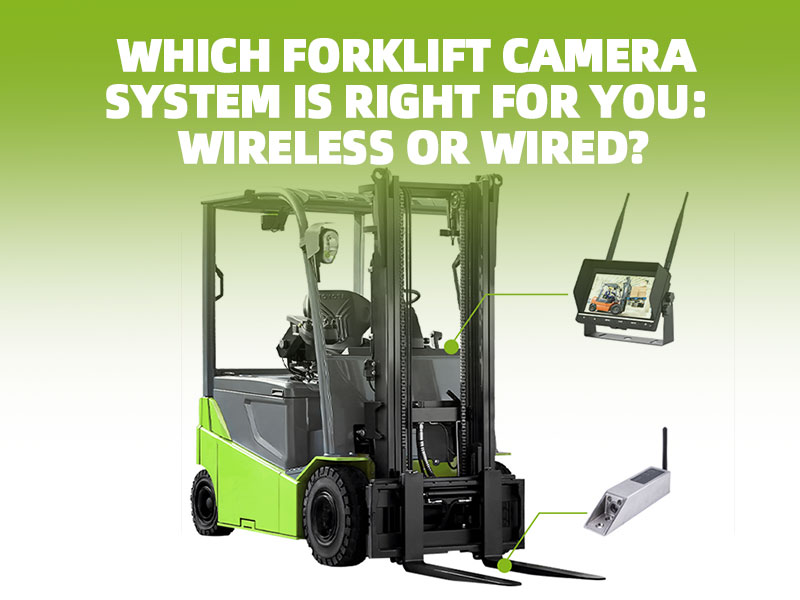
Which Forklift Camera System is Right for You: Wireless or Wired?

In today’s logistics and warehousing sector, the forklift camera system has become a crucial tool for enhancing safety and operational efficiency. However, businesses often face a critical decision when choosing a forklift camera system: whether to opt for a wireless forklift camera system or a wired forklift camera system. The following will provide an in-depth comparison of these two systems, exploring their advantages and disadvantages, as well as their applicability in different scenarios.

Which Forklift Camera System is Right for You: Wireless or Wired?插图

Wired forklift camera system

Wireless forklift camera systems offer a range of advantages, with one of them being a high level of flexibility. Due to the absence of wiring constraints, businesses can install and adjust camera positions more freely, accommodating various work scenarios. This flexibility is particularly crucial in dynamic environments where frequent camera movement is required. Additionally, the installation of wireless systems is relatively straightforward, reducing maintenance costs.

However, wireless systems also come with some drawbacks. The stability of the signal may be influenced by external interference, leading to less stable video feeds. Additionally, some wireless systems may require more frequent battery replacements, potentially increasing operational costs.

Wired forklift camera system

Relatively speaking, wired forklift camera systems provide a more stable signal. Due to their wired connections, these systems are less susceptible to external interference, ensuring continuous and reliable monitoring. Additionally, wired systems typically do not require frequent battery replacements, as they are often powered by a stable electrical source.
However, wired systems tend to be more cumbersome in terms of installation, requiring wiring that may involve additional engineering adjustments. This could pose some inconvenience, particularly in scenarios where frequent camera movement or working within narrow spaces is necessary.

How to choose between wireless and wired camera systems

When choosing between wireless and wired forklift camera systems, businesses should balance their decision based on practical needs. For scenarios requiring frequent movement and higher flexibility, wireless camera systems may be more suitable. Conversely, for fixed and long-term monitoring situations, wired camera systems may offer greater reliability.

Additionally, cost is a significant consideration. Wireless systems typically have lower installation and maintenance costs, but it’s crucial to account for potential additional expenses related to battery replacements. Wired systems involve a higher initial investment but may prove more economical over the long term.

Future trends

The continuous advancement of technology has brought improvements to both wireless and wired systems. Wireless technology is evolving, leading to enhanced signal stability and interference resistance. Meanwhile, wired systems are also innovating, incorporating more convenient wiring techniques.

In the future, as technology progresses, the differences between these two systems will gradually diminish. Therefore, when making decisions, businesses should consider various factors comprehensively to ensure that the chosen system can best meet their needs. Whether wireless or wired, both should serve as powerful tools to enhance efficiency and safety.

Conclusione

Forklift camera systems play a crucial role in enhancing the safety and efficiency of forklift operations. They eliminate blind spots, monitor potential hazards in real-time, provide operational feedback, and offer innovative solutions for industrial and warehouse safety management. As technology advances, these systems will continue to bolster industrial safety, ensuring the well-being of operators and those in the vicinity.

Luview is a Chinese supplier of forklift camera system solutions, providing reliable solutions to enhance the safety and efficiency of forklift operations. Contact us to learn more at sales@luview.com. Choose Luview and let safety and efficiency go hand in hand! Don’t let negligence lead to accidents. Partner with us to create a safer and more efficient working environment!

How do forklift cameras enhance safety缩略图

How do forklift cameras enhance safety

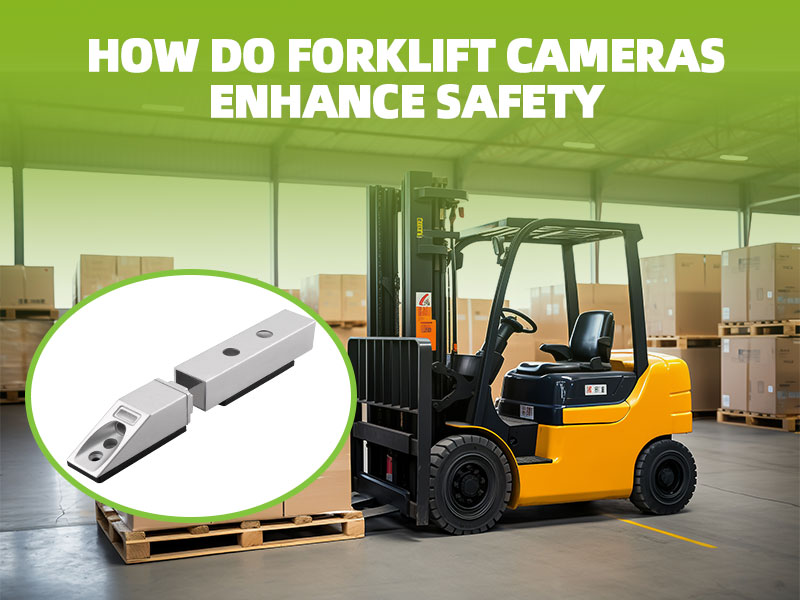
In the industrial and warehousing sectors, forklifts serve as indispensable tools, providing crucial support for production and logistics. However, the safety hazards inherent in their operation—such as limited visibility, blind spots, and operator negligence—cannot be overlooked. To address these safety challenges, forklift cameras have emerged as an innovative solution to enhance the safety of forklift operations. In this article, we will delve into forklift cameras, specifically focusing on how they play a pivotal role in improving safety, offering a fresh perspective, and presenting solutions for safety management in industrial and warehouse settings.

How do forklift cameras enhance safety插图

Safety challenges in forklift operations

Despite the invaluable role forklifts play in improving efficiency, their operational process entails a series of potential safety risks. The limited visibility of forklift operators, especially in busy work environments where blind spots are prevalent, poses a significant challenge. Additionally, the possibility of operational errors due to factors such as fatigue or distraction further increases the likelihood of collisions and accidents.

Innovative solution of forklift cameras

With the rapid advancement of technology, the introduction of forklift cameras has provided an innovative solution to address the aforementioned safety challenges. Among these solutions, the application of forklift cameras stands out as a crucial one. By installing high-quality cameras on forklifts, these cameras can monitor the surrounding environment in real time, providing high-definition images and video information. This enables operators to gain a more comprehensive and clear view.

The crucial role of forklift lights and cameras

Eliminating blind spots: Forklift cameras play a crucial role in covering blind spots, especially during essential operations such as turning, reversing, as well as when handling goods. They timely detect potential obstacles or pedestrians, thereby reducing the risk of collisions and close encounters.

Real-time monitoring and warning: Forklift camera systems are equipped with intelligent alert systems. Upon detecting hazardous factors, they instantly alert operators through visual and auditory warnings, assisting them in promptly responding to avoid potential accidents.

Enhancing operator abilities and skills

Forklift cameras play a crucial role not only in accident prevention but also in providing real-time operational feedback to operators. Through clear images and visual feedback, operators can accurately grasp the position and posture of the forklift, effectively reducing the occurrence of operational errors. This real-time feedback system can also be used for training and assessing the performance of operators, offering them more targeted guidance to continually enhance their operational skill levels.

LUVIEW forklift cameras and application in safety

The LUVIEW forklift camera, with its advanced technology and multiple functional features, provides a new level of safety for forklift operations. Utilizing a high-resolution 1/3 CMOS sensor, it supports analog high-definition video at 700TVL, effectively eliminating blind spots for operators. Its IP69K-rated waterproof and dustproof design ensures the stable operation of the camera in harsh environments. The camera supports mirror and ruler switching functions, allowing operators to adjust the image mode as needed and accurately assess distances and object sizes.

Additionally, the design takes into consideration tailpipe and magnet installations, ensuring the camera is securely fixed to the forklift, providing a consistently reliable field of view. The integration of these features plays a crucial role in enhancing operator safety, reducing the risk of accidents, and improving overall work efficiency. The LUVIEW forklift camera serves as an innovative solution for safety management in the industrial and warehouse sectors.

Conclusione

Overall, forklift cameras play a crucial role in enhancing the safety and efficiency of forklift operations. Through the elimination of blind spots, real-time monitoring of potential hazards, and providing operational feedback, they bring forth innovative solutions for safety management in the industrial and warehouse sectors. With continuous technological advancements, forklift camera systems will continue to drive improvements in industrial safety, offering comprehensive support for the safety of operators and those in the surrounding environment.

LUVIEW is a professional forklift camera provider from China. If you’re seeking a trustworthy solution to enhance the safety and efficiency of forklift operations, unquestionably, we are your ideal choice. Feel free to contact us immediately to learn more details at: sales@luview.com. Choose LUVIEW and let safety and efficiency move forward hand in hand! Don’t let negligence become the catalyst for accidents. Partner with us to create a safer and more efficient work environment together!

How do work lamp cameras improve agricultural monitoring?缩略图

How do work lamp cameras improve agricultural monitoring?

Introduzione

The importance of agricultural monitoring

Agriculture is a crucial component of human life. With the continuous growth of the global population, the demand for food is on the rise. Consequently, agricultural monitoring has become a key factor in ensuring food production security and agricultural sustainability. In the past, traditional monitoring methods were often constrained by limitations in time, space, and technological conditions, failing to offer round-the-clock effective surveillance.

Innovative applications of work lamp cameras in agricultural monitoring

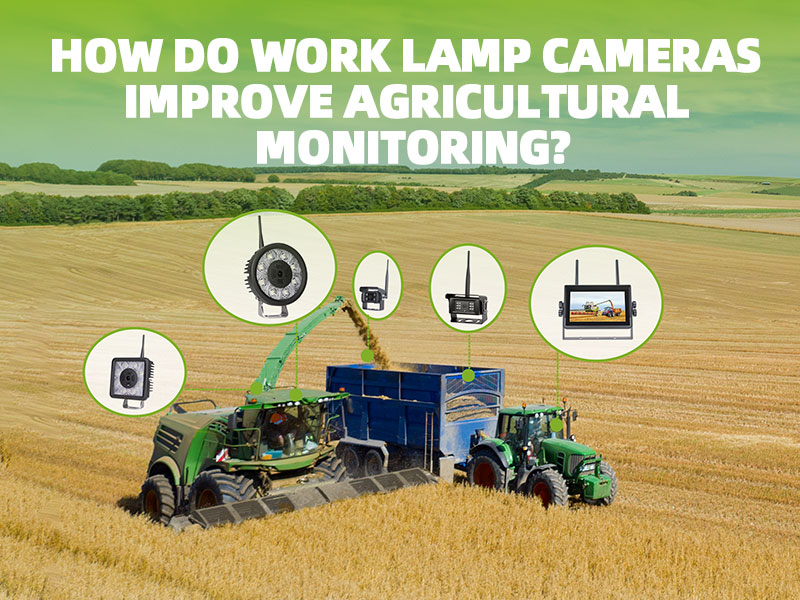
As an innovative solution in modern agricultural surveillance, work lamp cameras offer farmers and landowners an efficient and comprehensive means of monitoring. These devices integrate lighting and camera functionalities, providing not only powerful illumination but also the capability to capture high-definition real-time video, enabling farmers to monitor every corner of their farms around the clock.

These work lamp cameras employ advanced technologies, including high-definition cameras, night vision capabilities, and intelligent monitoring systems, allowing them to deliver clear images and videos in low-light or dark environments. Additionally, they often feature waterproof and durable characteristics, making them adaptable to various adverse weather and environmental conditions.

The intelligent features of these devices, such as motion detection, remote monitoring, and real-time data transmission, empower farmers to quickly respond and take necessary measures. This aids in improving production efficiency, protecting crops, preventing theft, and promoting sustainable agricultural practices.

As an innovative solution in agricultural monitoring, work lamp cameras bring new hope to the agricultural sector and play a crucial role in modern agricultural management.

Advantages of work lamp cameras in agricultural monitoring

1. Real-time monitoring capability

  • 24/7 Surveillance

Work lamp cameras offer round-the-clock monitoring capabilities, free from time constraints, enabling farmers to view their farms’ real-time status at any given moment.

  • Advantages of nighttime monitoring

These cameras are equipped with night vision capabilities, providing high-definition images and videos even in low-light conditions. The ability for nighttime monitoring brings convenience and reliability to farmers, allowing them to monitor their farms during the dark hours.

2. Enhanced Farm Security

  • Prevention of theft and vandalism

Work lamp cameras can monitor every corner of the farm, promptly detecting any potential theft or vandalism, thereby providing a preventive measure and a deterrent effect.

  • Real-time event response

When abnormal situations occur, the cameras can immediately trigger alerts and provide real-time video, enabling farmers to take swift action and minimize potential losses.

3. Crop health monitoring

  • Precision data collection

These cameras can not only capture images but also collect data on crop growth conditions, soil moisture, temperature, and more, assisting farmers in making precise decisions.

  • Prevention of disease and pest spread

Through continuous monitoring of crops, work lamp cameras can assist farmers in early detection of plant diseases or pest infestations, enabling them to implement appropriate control measures and prevent further spread.

How do work lamp cameras improve agricultural monitoring?插图

Luview work lamp camera

The Luview work lamp camera features a 1/2.9 CMOS sensor supporting 720P high-definition video and 2.4GHz digital wireless transmission technology. It provides clear and detailed monitoring footage, covering a spacious distance of up to 140 meters. With its white LED full-color night vision function, it can deliver clear images even in dark environments. The camera is equipped with IP69K-level waterproof and dustproof protection, a wide voltage design (12V-24V), and an optional magnetic installation design, enhancing adaptability and convenience. These features make it an ideal choice for agricultural monitoring, meeting the real-time, high-quality, and all-weather monitoring needs of farmers, contributing to the improvement of agricultural management and safety.

Conclusione

Agricultural monitoring is of paramount importance, and work lamp cameras bring remarkable advantages to the solution. Their real-time monitoring capabilities, including 24/7 and night monitoring, provide clear footage around the clock. In terms of farm security, they help prevent theft and vandalism, elevating overall safety levels through real-time event response. Regarding crop health monitoring, precise data collection and prevention of disease and pest spread facilitate scientific decision-making, minimizing crop losses. In summary, choosing work lamp cameras is an intelligent decision to enhance agricultural management, ensure safety, and improve production efficiency.

Luview is a leading provider of work lamp cameras in China, offering professional and reliable solutions. If you are looking for the best supplier, feel free to contact us at sales@luview.com for more detailed information. Choosing Luview, and collaborate with us to fulfill your agricultural monitoring needs, playing a role in shaping the future of smart agriculture!

Importance of salt spray testing for vehicle cameras缩略图

Importance of salt spray testing for vehicle cameras

The Impact of Salt Spray on Vehicle Cameras

How Does Salt Spray Affect the Functionality and Lifespan of Vehicle Cameras

The impact of salt spray on vehicle cameras is primarily manifested in their functional performance and lifespan. When cameras are exposed to a salt spray environment, various damages may occur, with corrosion being the most significant.

Functional Impact: Salt spray can infiltrate the tiny gaps or cracks in the camera, affecting its internal electronic components and mechanical parts. This may result in various functional impairments, such as reduced image clarity, color distortion, focusing issues, or complete malfunction, rendering it unable to operate normally.

Corrosive Damage: The salt content in salt spray triggers chemical reactions upon contact with metal surfaces, accelerating the corrosion of metal components. This corrosion may harm the camera’s casing, connectors, electronic circuits, and sensors, ultimately affecting its stability and lifespan.

Importance of salt spray testing for vehicle cameras插图

In environments around vehicles, such as coastal areas or roads treated with salt during winter, vehicle cameras are more susceptible to exposure to salt spray. Therefore, conducting salt spray testing is crucial for assessing the durability and performance of cameras. The results of the tests can assist manufacturers in refining designs, selecting more corrosion-resistant materials, and ensuring that vehicle cameras can operate reliably in various challenging environments.

The importance of salt spray testing for vehicle safety and functionality

Cameras in modern vehicles play a crucial role in enhancing vehicle safety and operational functionality. These cameras serve various purposes, including monitoring the surrounding environment, assisting in driving, and providing the driver with a clearer view. Salt spray testing is essential to ensure the reliability of these cameras, thereby further enhancing the overall safety of the vehicle.

From a safety perspective, vehicle cameras play a crucial role in modern vehicles. They are utilized in advanced driver assistance systems, including features such as reverse assistance, lane-keeping assistance, blind-spot monitoring, and more. Additionally, they provide the driver with a clearer environmental perspective, helping reduce the likelihood of accidents and enhancing overall driving safety.

From an operational functionality perspective, cameras play a key role in enhancing vehicle capabilities. They can be utilized for providing navigation assistance, parking assistance, and features related to autonomous driving, making driving more convenient and secure.

Salt spray testing ensures the reliability of vehicle cameras in harsh environments. By simulating the impact of salt spray on the cameras, the testing assesses their durability and corrosion resistance. If cameras fail to function properly in a salt spray environment, their performance may be compromised during actual vehicle use, affecting the overall safety of the vehicle.

Therefore, ensuring that vehicle cameras undergo rigorous salt spray testing to guarantee their reliability is crucial for enhancing the overall safety of the vehicle. Only cameras that have undergone reliable testing can operate stably in various adverse conditions, providing drivers with accurate and clear information, thereby ensuring driving safety and the effectiveness of operational features.

Conclusione

In summary, the impact of salt spray testing on vehicle cameras is directly related to the safety and functionality of the vehicle. This critical testing phase ensures that cameras can operate reliably in harsh climates and high-corrosion environments. If you are seeking outstanding solutions for vehicle vision, Luview is a professional provider of vehicle cameras based in China, renowned for its advanced technology and high-quality products. We are committed to delivering the most reliable, durable, and high-performance cameras to ensure the safe operation of vehicles in various conditions.

Luview has consistently adhered to strict standards in ensuring product quality, especially through salt spray testing to validate the durability and stability of cameras. This testing is a crucial part of Luview’s commitment to ensuring exceptional performance in extreme environments, further showcasing our outstanding performance in the industry. Moreover, if you are looking for rear-view cameras or a reliable supplier, Luview is also a wise choice.

Feel free to contact our sales team anytime by sending an email to sales@luview.com for more detailed product information and personalized solutions. Choose Luview to meet your vehicle safety and visual needs!

How do you choose a motorcycle dash cam?缩略图

How do you choose a motorcycle dash cam?

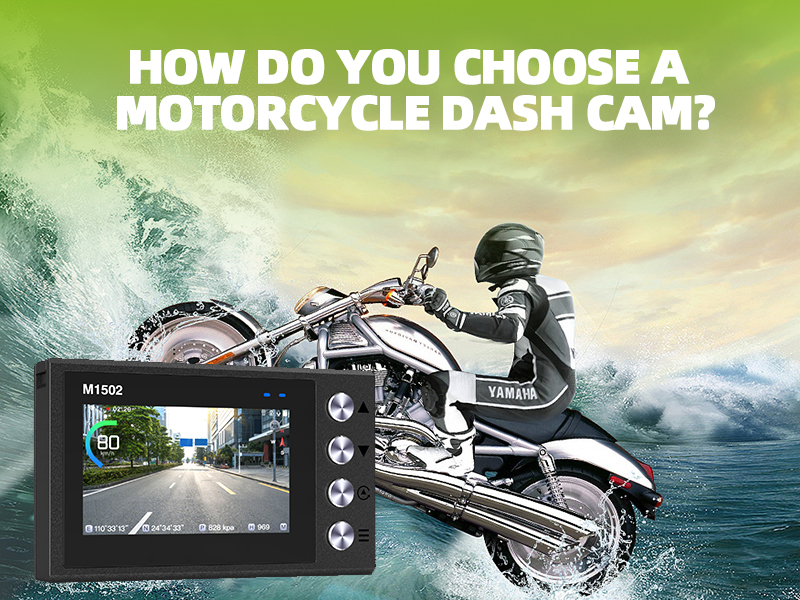
Choosing a waterproof motorcycle dash cam is a crucial decision, especially for riders who want to document their journeys and protect their equipment. In this article, we will delve into the key factors when selecting a waterproof motorcycle dash cam, emphasizing the importance of customizing the choice based on the expected weather conditions in specific regions. We will also provide maintenance tips to ensure the long-term waterproof performance of the motorcycle dash cam, highlighting the critical importance of selecting a truly waterproof device for riders. The article will cover common mistakes to avoid when using waterproof equipment and the necessity of practical testing to verify waterproof performance. As we explore these key issues, riders will gain a better understanding of how to choose, use, and maintain their motorcycle dash cam in aquatic challenges.

How do you choose a motorcycle dash cam?插图

Factors to consider when choosing a waterproof dash cam

When selecting a waterproof dash cam, the following factors are crucial:

1. Expected Weather Conditions in Your Area

Riders should choose the appropriate level of waterproofing based on the weather characteristics of their area. If the area is prone to frequent rain or fog, a dash cam with a higher waterproof rating (such as IPX7 or IPX8) would be a better choice. Conversely, if the riding environment is typically dry, a lower level of waterproofing (such as IPX4 or IPX5) may suffice.

2. Comparison of Different Waterproof Ratings

Waterproof ratings range from IPX0 to IPX8, with higher numbers indicating stronger protection against water. It’s important to note that higher levels of waterproofing usually mean higher costs. Therefore, riders need to balance the level of waterproofing against the price to find the best device that meets their needs and budget. For instance, an IPX6 rating can withstand strong jets of water, making it suitable for riding in heavy rain, while devices rated IPX7 and IPX8 can continue to operate while completely submerged, ideal for riders who frequently encounter extreme weather or watery environments.

3. Installation Position and Usage

The mounting location of the dash cam can affect the degree to which it is exposed to water. For instance, a dash cam installed at the bottom of a motorcycle may require a higher waterproof rating as it is more likely to come into contact with water and debris from the road. Furthermore, if a rider plans to use the dash cam across various climate conditions, such as commuting in the city to off-road adventures, opting for a dash cam with a higher waterproof rating would be more prudent.

Maintenance Tips for Waterproof Motorcycle Dash Cams

Even the highest-rated waterproof motorcycle dash cams require proper maintenance to ensure their long-term waterproof capabilities. Here are some best practices:

1. Regular Inspections

Periodically check the dash cam’s sealing O-rings and casing for any damage. Cracks or wear could lead to water ingress.

2. Cleaning Recommendations

Gently clean the dash cam’s casing with a slightly damp cloth, avoiding any corrosive cleaning agents that might damage the seals. Ensure that both your hands and the dash cam’s surface are completely dry before touching any electronic interfaces.

3. Seal Ports

If the dash cam has any external ports, like USB slots or power inputs, use waterproof covers or tape to ensure they remain sealed when not in use.

4. Avoid Prolonged Exposure

While high-grade waterproof dash cams are designed to be water-resistant, avoiding prolonged exposure to water, especially when not in use, can extend their lifespan.

5. Storage Suggestions

When not in use, store the dash cam in a dry, cool place away from extreme temperatures and humidity, which can damage the electronic components.

6. Chemical Avoidance

Keep the dash cam away from solvents, detergents, or other chemicals that may degrade its housing materials and waterproofing.

7. Follow the Manual

Always read and adhere to the operation and maintenance guide provided by the manufacturer before using the dash cam, as different models may have specific maintenance requirements.

Comparison of Waterproof and Water-Resistant Motorcycle Dash Cams

“Waterproof” and “Water-Resistant” are two terms that are often easily confused, but understanding the difference between them is crucial when selecting a motorcycle dashcam:

Waterproof: Waterproof devices can withstand water penetration and are typically capable of being submerged under a certain water pressure without taking in water. Waterproof products often come with specific IP (Ingress Protection) ratings, such as IP67 or IP68, indicating that they can endure being underwater at a certain depth for a specified duration without sustaining damage.

Water-Resistant: Water-resistant devices can resist water ingress to a certain extent but cannot endure complete submersion. A water-resistant device might have IPX4 or IPX6 ratings, signifying that it can withstand splashes or water jets but may sustain damage if fully submerged.

For motorcycle riders, choosing a truly waterproof dashcam is crucial because motorcycles, especially in adverse weather or off-road conditions, are prone to substantial water exposure. A waterproof dashcam provides comprehensive protection, ensuring that its functionality remains unaffected even in heavy rain, guaranteeing that crucial moments are not lost. Waterproof dashcams are designed with a focus on durability and sealing, making them more reliable for long-term use.

Avoidable Common Mistakes

When dealing with waterproof motorcycle dashcams, riders may make some common mistakes that could compromise the device’s waterproof performance or lead to damage:

  • Incorrect Installation
Improper installation can damage the waterproof sealing of the dashcam, leading to water infiltration. It is essential to strictly follow the manufacturer’s guidelines for installation, ensuring that all seals are correctly in place.
Neglecting Regular Inspections: Riders may overlook regular inspections of the dashcam’s seals and exterior for damages, which can weaken its waterproof capabilities. Regularly checking the device’s seals and casing and promptly replacing damaged components is crucial.
  • Using Corrosive Cleaning Agents

The use of powerful or corrosive cleaning agents can damage the casing and seals of the dashcam. Mild cleaning agents should be chosen, and the dashcam should be gently wiped with a clean cloth.

  • Exposure to Extreme Temperatures

Prolonged exposure of the dashcam to extreme high or low temperatures can damage its electronic components or sealing materials. It is advisable to avoid using or storing the dashcam in extremely hot or cold environments.

  • Ignoring the Waterproofing of Interfaces

Even with a waterproof dashcam, external interfaces such as USB slots or charging ports may not be waterproof when exposed. It is important to keep these interfaces sealed when not in use.

Opening the Casing Before Fully Drying: Opening the casing of the dashcam or its components before they are completely dry may allow moisture to enter. Before opening the dashcam, ensure that it is thoroughly dry.

To avoid these common mistakes, riders should:

①Carefully read and adhere to installation and maintenance instructions.

②Conduct regular inspections and maintenance.

③Utilize appropriate cleaning methods and materials.

④Pay attention to the storage and usage environment of the device.

Following these practices can significantly reduce the risk of device damage, ensuring the waterproof performance of the dashcam is maintained and thereby extending the lifespan of the equipment.

Conclusione

When choosing a motorcycle dashcam, considering factors like waterproof performance, maintenance needs, comparing waterproof and water-resistant features, and avoiding common mistakes are crucial for ensuring stable device performance. If you’re seeking a reliable supplier, Luview, a leading provider from China, specializes in offering top-notch motorcycle dashcams. Their products excel in waterproof capabilities, video resolution, and more. Take action now and reach out via sales@luview.com for further details.

Guide to Waterproof Ratings for Motorcycle Dashcam缩略图

Guide to Waterproof Ratings for Motorcycle Dashcam

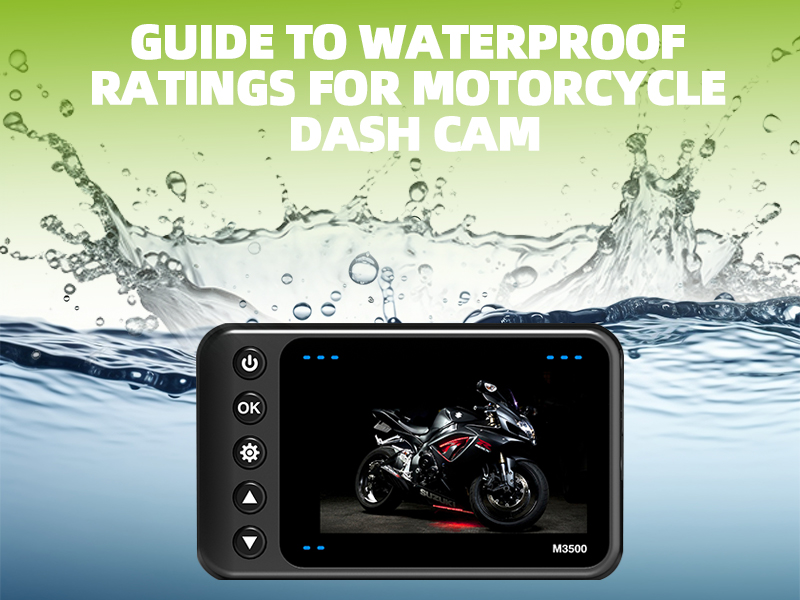
In the world of motorcycle riding, a dashcam has become an indispensable device. It not only captures the scenery and events during the journey but, more importantly, can provide crucial evidence in the event of an accident. However, given the open design of motorcycles, their dashcams must be able to withstand harsh weather conditions, especially water. This introduces a crucial concept: IP rating, or Ingress Protection rating, which is a standard for measuring the waterproof and dustproof capabilities of electronic devices. For motorcycle dashcams, an appropriate IP rating not only ensures the durability of the device but also guarantees reliability in various weather conditions.

From IPX4, which protects against splashing water, to IPX8, allowing for prolonged submersion, different waterproof ratings define the depth and duration of water resistance for dashcams, ensuring the rider’s peace of mind and the integrity of the recording device. In this article, we will delve into the importance of these waterproof ratings and how they safeguard your motorcycle dashcam from water damage.

Motorcycle Dashcam Waterproof Ratings: Introduction and Significance

Guide to Waterproof Ratings for Motorcycle Dashcam插图

1. Get to Know Waterproof Ratings

  • Explain IP protection levels for electronic equipment

In electronic devices, the IP rating, also known as the Ingress Protection level, is a standard set by the International Organization for Standardization (ISO) to define the device’s ability to resist the entry of foreign objects and water. The IP rating consists of two digits: the first digit indicates the device’s resistance to the infiltration of solid objects such as dust, and the second digit represents the degree of protection against water ingress.

  • How the IP Rating Relates to the Waterproofing of Motorcycle Dash cams.

For motorcycle dash cams, a high IP rating is crucial as they must operate effectively in various weather conditions, including rain and humid environments. A common waterproof rating, such as IP68, signifies that the device is fully dust-resistant (‘6’) and capable of withstanding prolonged submersion in water (‘8’). When consumers choose a motorcycle dash cam, it is advisable to opt for products with a high IP rating to ensure reliable performance even in extreme weather conditions.

2. The Importance of Waterproofing for Motorcycle Dashcams

  • Why Waterproofing is Crucial for Motorcycle Dashcams

The waterproof feature of a motorcycle dashcam is crucial for several reasons:

①Weather Adaptability: Motorcycles are frequently used in various weather conditions, including rainy days. A waterproof dashcam can continue to function seamlessly in adverse weather conditions, providing uninterrupted recording capabilities for motorcyclists.

②Device Protection: A non-waterproof dashcam may suffer damage to its internal circuits due to water infiltration, leading to device malfunction or even complete failure. In contrast, a waterproof device can effectively prevent water ingress, thereby extending its lifespan.

③Safety Recording: One of the primary functions of a dashcam is to provide evidence in the event of an accident. When driving in rainy conditions, if the dashcam is not waterproof, there is a risk of it failing at the most critical moment, unable to provide a recording of the accident when it is needed the most.

④Maintenance Costs: A waterproof dashcam reduces the likelihood of damage due to weather conditions, thus saving costs associated with repairing or replacing the device.

  • Analyzing the Potential Risks of Non-Waterproof Dashcams to Water

Short Circuit: Contact between water and electronic components can result in a short circuit, potentially causing immediate damage to the dashcam.

Corrosion: Prolonged exposure to a humid environment, even if faults don’t occur immediately, can lead to gradual corrosion of the dashcam’s internal metal components, resulting in performance degradation.

Lens Fogging: The lens of a non-waterproof dashcam may fog up in rainy or humid conditions, affecting image quality and rendering the recording ineffective.

3. Different Waterproof Ratings of Dashcams

Explanation of Specific IP Ratings Relevant to Motorcycle Dashcams

For motorcycle dashcams, the IP (Ingress Protection) rating is a crucial standard for assessing their dust and water resistance capabilities. Here are some specific IP ratings relevant to motorcycle dashcams and their meanings:

① IP65: Indicates the dashcam can prevent dust ingress entirely and withstand low-pressure water jets from any direction.

② IP66: Indicates the dashcam is completely dustproof and can endure powerful water jets from any direction.

③ IP67: Indicates the dashcam is entirely dustproof and can withstand brief immersion in water up to 1 meter deep (usually within 30 minutes).

④ IP68: Indicates the dashcam is not only entirely dustproof but can also operate for extended periods underwater, with specific depth and duration typically specified by the manufacturer.
  • Delving into the Significance of Each Digit in the IP Rating:

The first digit (0-6): Indicates the dust protection level. A higher number signifies stronger dust resistance. ‘6’ means the device is completely dust-tight, preventing any dust from entering.

The second digit (0-8): Represents the water resistance level. A higher number indicates stronger water resistance. For instance, ‘5’ means the device can withstand low-pressure water jets, while ‘8’ might indicate the device can endure continuous, prolonged immersion in water.

When designing motorcycle dashcams, consideration is given to the unique usage environment of motorcycles. Therefore, products with IP67 or IP68 ratings are often chosen to ensure normal operation in various weather conditions. For motorcycle riders, it is crucial to understand these ratings and select products based on their specific needs.

Conclusione

When selecting a motorcycle dash cam, opting for a device with excellent waterproof capabilities is crucial to ensure stable operation in all weather conditions. Understanding the device’s IP rating—the level of protection against solid objects and liquid ingress—is key. The IPX rating specifically denotes waterproof protection, making it easier to compare product performance. As China’s leading motorcycle dash cam supplier, Luview offers high-quality devices rigorously tested for waterproofing to ensure your riding safety. Need a reliable dash cam? Contact sales@luview.com for more details and ensure your dash cam performs optimally even in the most extreme conditions.

Perché la certificazione ISO è fondamentale per i fornitori di telecamere per veicoli?缩略图

Perché la certificazione ISO è fondamentale per i fornitori di telecamere per veicoli?

Introduzione alla certificazione ISO

La certificazione ISO è una certificazione rilasciata dall'Organizzazione internazionale per la normazione (ISO), che verifica che il sistema di gestione, i processi di produzione, i servizi o i processi di documentazione di un'organizzazione siano conformi a tutti gli standard di qualità e sicurezza standardizzati. La certificazione ISO è ampiamente riconosciuta a livello globale e rappresenta un importante simbolo dell'impegno di un'azienda verso il miglioramento continuo e la soddisfazione delle esigenze dei clienti, indipendentemente dalle dimensioni del settore.

ISO 9001: Gestione della qualità per i fornitori del settore automobilistico

L'importanza della norma ISO 9001 nell'industria automobilistica per la gestione della qualità e la conformità ai requisiti legali della catena di fornitura

Perché la certificazione ISO è fondamentale per i fornitori di telecamere per veicoli?插图
La norma ISO 9001 riveste un'importanza fondamentale nell'industria automobilistica per la gestione della qualità e la conformità ai requisiti legali nella catena di fornitura. Questo standard di gestione della qualità riconosciuto a livello mondiale è particolarmente cruciale per i fornitori automobilistici. Esso garantisce che i fornitori siano in grado di fornire costantemente prodotti e servizi che soddisfano i requisiti dei clienti e altri requisiti normativi pertinenti. Attraverso l'istituzione di processi completi di gestione della qualità, i fornitori automobilistici possono ottimizzare le loro operazioni, ridurre gli errori, migliorare l'efficienza e, in ultima analisi, migliorare la qualità dei prodotti. In termini di gestione della catena di fornitura, l'adesione alla norma ISO 9001 contribuisce a mitigare i rischi all'interno della catena di fornitura e a garantirne la conformità legale, il che è fondamentale per prevenire potenziali conseguenze catastrofiche.

ISO 14001: Gestione ambientale nella produzione di telecamere per veicoli

L'importanza della gestione ambientale e come la norma ISO 14001 aiuta le aziende automobilistiche a ridurre l'impatto ambientale

La norma ISO 14001 è uno standard internazionale incentrato sui sistemi di gestione ambientale e riveste particolare importanza per i produttori di telecamere per veicoli. Questo standard è stato concepito per aiutare le organizzazioni a ridurre il loro impatto ambientale negativo, garantire la conformità alle normative ambientali e migliorare continuamente le prestazioni ambientali. Attraverso l'implementazione della norma ISO 14001, le aziende automobilistiche possono gestire in modo più efficace il consumo di energia e risorse nei loro processi produttivi, ridurre gli sprechi e diminuire l'inquinamento. Ciò promuove pratiche commerciali sostenibili, non solo adempiendo alla responsabilità sociale delle imprese, ma anche migliorando la competitività sul mercato nell'attuale panorama dei consumatori attenti all'ambiente.

ISO 45001: Salute e sicurezza sul lavoro nel settore manifatturiero

Il ruolo della norma ISO 45001 nel miglioramento della sicurezza sul lavoro e nella riduzione dei rischi professionali nella produzione di telecamere per veicoli

ISO 45001 è uno standard internazionale volto ad aiutare le organizzazioni a migliorare i propri sistemi di gestione della salute e sicurezza sul lavoro, riducendo i rischi sul posto di lavoro e prevenendo infortuni e problemi di salute legati al lavoro. Per le aziende che producono telecamere per veicoli, questo standard è particolarmente importante, poiché i loro ambienti di produzione possono comportare vari potenziali rischi sul posto di lavoro. Attraverso l'implementazione della norma ISO 45001, le aziende possono identificare sistematicamente i pericoli e attuare misure efficaci di controllo dei rischi, migliorando così le prestazioni complessive in materia di salute e sicurezza sul lavoro. Ciò non solo contribuisce a proteggere la salute e il benessere dei dipendenti, ma comporta anche vantaggi economici grazie alla riduzione dei costi associati agli infortuni e alle malattie.

ISO 50001: Gestione energetica nelle operazioni automobilistiche

I vantaggi della norma ISO 50001 nella riduzione del consumo energetico e nella promozione della sostenibilità per le aziende automobilistiche

ISO 50001 è uno standard internazionale incentrato sui sistemi di gestione dell'energia, che aiuta le aziende automobilistiche a ridurre il consumo energetico attraverso una gestione sistematica dell'energia. Questo standard incoraggia le organizzazioni a monitorare, misurare, documentare e riferire in modo più efficace i propri flussi energetici, promuovendo così un miglioramento continuo delle prestazioni energetiche. Per l'industria automobilistica, ciò significa ridurre i costi e l'impronta di carbonio nel processo di produzione di telecamere per veicoli e altri componenti automobilistici. L'implementazione della norma ISO 50001 aiuta le aziende a identificare e sfruttare le opportunità di risparmio energetico, non solo riducendo l'impatto ambientale, ma anche promuovendo lo sviluppo sostenibile e migliorando i vantaggi economici.

ISO 27001: Sicurezza delle informazioni nelle aziende automobilistiche

L'importanza della norma ISO 27001 nella protezione dei dati e delle informazioni sensibili nel settore automobilistico

ISO 27001 è uno standard internazionale per i sistemi di gestione della sicurezza delle informazioni (ISMS), fondamentale per le aziende automobilistiche che trattano grandi quantità di dati sensibili, tra cui informazioni sui clienti, dati sui dipendenti e materiali di progettazione e sviluppo. La norma ISO 27001 fornisce un quadro di riferimento per aiutare le organizzazioni a proteggere queste informazioni da accessi non autorizzati e violazioni dei dati attraverso l'implementazione di misure di sicurezza adeguate. Ciò non solo aiuta le aziende automobilistiche a prevenire vulnerabilità di sicurezza, ma rafforza anche la fiducia tra consumatori e partner, garantendo la continuità operativa e la conformità.

IATF 16949: Qualità nella produzione automobilistica

Come lo standard IATF 16949 si allinea agli standard ISO concentrandosi sulla prevenzione dei difetti e sulla gestione della qualità nella produzione automobilistica

IATF 16949 è una specifica tecnica sviluppata in collaborazione tra l'International Automotive Task Force (IATF) e l'Organizzazione internazionale per la normazione (ISO), specificamente adattata alla catena di fornitura dell'industria automobilistica. Si basa sullo standard ISO 9001 e mira a promuovere processi di gestione e miglioramento continuo della qualità, concentrandosi sulla prevenzione dei difetti e sulla riduzione degli sprechi nell'industria automobilistica. La norma IATF 16949 richiede ai produttori automobilistici di implementare sistemi di gestione della qualità coerenti durante l'intero processo di produzione e assemblaggio, al fine di garantire la fornitura di prodotti e servizi di alta qualità. Questo standard aiuta i fornitori dell'industria automobilistica a rimanere competitivi sul mercato globale, soddisfacendo al contempo le crescenti esigenze dei consumatori in termini di sicurezza e affidabilità dei veicoli.

Caso di studio sulla certificazione ISO nel settore automobilistico

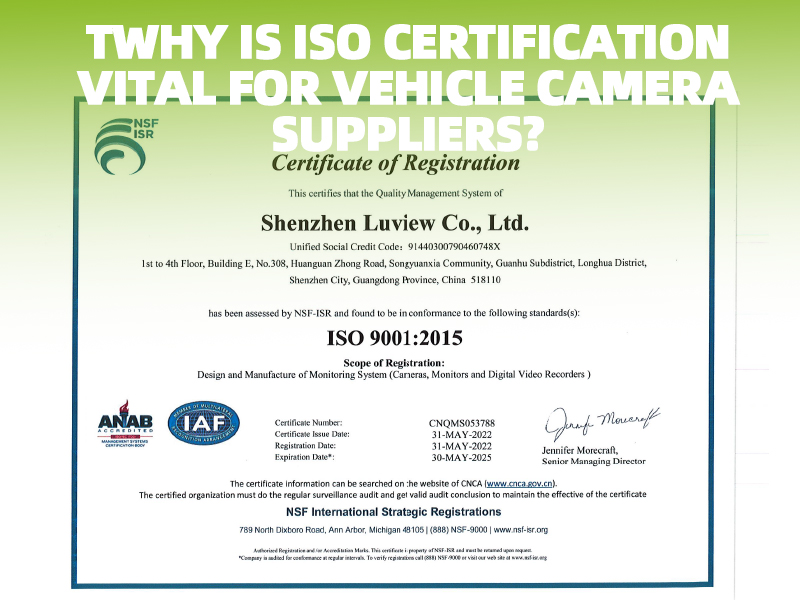
Nel settore automobilistico, ottenere certificazioni ISO come ISO 9001 e IATF 16949 può fornire un vantaggio competitivo perché rappresentano un impegno verso la qualità, la sicurezza e l'efficienza. Le certificazioni ISO non solo aiutano le aziende a conformarsi alle migliori pratiche internazionali e ai requisiti normativi, ma aumentano anche la fiducia dei consumatori, dei fornitori e degli investitori. Luview, ad esempio, ha ottenuto le certificazioni ISO 9001 e IATF 16949, che hanno elevato la reputazione e il valore del marchio dell'azienda. Ciò dimostra l'impegno di Luview nel fornire prodotti di alta qualità in linea con i più elevati standard internazionali.

Conclusione

La certificazione ISO è fondamentale per i fornitori di telecamere per veicoli, in quanto garantisce la qualità e la sicurezza dei prodotti migliorando al contempo la competitività sul mercato globale. Luview ha rafforzato la propria posizione di mercato nella produzione e fornitura di soluzioni per prodotti di sicurezza per la visione posteriore ottenendo le certificazioni ISO 9001 e IATF 16949. In qualità di produttore professionale di prodotti di sicurezza per la visione posteriore, offriamo una vasta gamma di articoli, tra cui telecamere per flotte e monitor per veicoli, impegnandoci a fornire soluzioni di sicurezza veicolare di alto livello. Scegli Luview per l'affidabilità. Per ulteriori informazioni, contattaci all'indirizzo sales@luview.com.

L'importanza dei test di invecchiamento per i monitor retrovisori dei veicoli缩略图

L'importanza dei test di invecchiamento per i monitor retrovisori dei veicoli

Introduzione

Il ruolo e l'importanza del monitor posteriore per veicoli

Il monitor posteriore per veicoli è un dispositivo installato all'interno dei veicoli, comunemente utilizzato per visualizzare immagini o video dell'area dietro al veicolo, aiutando i conducenti nelle manovre di retromarcia, parcheggio e guida in modo più sicuro. Questi monitor funzionano in genere in combinazione con telecamere di retromarcia o telecamere posteriori per fornire una visione in tempo reale della parte posteriore, consentendo ai conducenti di vedere chiaramente potenziali ostacoli, pedoni o altri veicoli.

L'importanza dei test di invecchiamento per i monitor retrovisori dei veicoli插图

La necessità dei test sull'invecchiamento

Data l'importanza dei monitor retrovisori per veicoli nel migliorare la sicurezza e la comodità di guida, è fondamentale garantirne l'affidabilità e le prestazioni. Ecco perché sono necessari i test di invecchiamento. I test di invecchiamento aiutano i produttori a garantire che questi monitor possano funzionare in modo affidabile per lunghi periodi in varie condizioni ambientali, soddisfacendo le esigenze dei conducenti e fornendo una sicurezza affidabile.

Principi fondamentali e scopo dei test sull'invecchiamento

Principi fondamentali dei test di invecchiamento

I test di invecchiamento sono metodi di prova sistematici progettati per simulare le condizioni che un prodotto può subire durante un uso prolungato e in ambienti difficili, al fine di valutarne le prestazioni, l'affidabilità e la durata. I principi di base dei test di invecchiamento includono:

Simulazione dell'utilizzo effettivo: Un principio fondamentale dei test di invecchiamento è quello di simulare le condizioni e gli ambienti che il prodotto potrebbe incontrare durante l'uso effettivo. Ciò significa che i test devono tenere conto dell'applicazione reale del prodotto e di fattori ambientali quali temperatura, umidità e vibrazioni.

Invecchiamento accelerato: I test di invecchiamento utilizzano spesso fattori acceleranti, come l'aumento della temperatura o dell'umidità, per accelerare il processo di invecchiamento del prodotto. Ciò consente di simulare gli effetti a lungo termine dell'uso in un periodo relativamente breve.

Monitoraggio e registrazione continui: Durante i test di invecchiamento, è essenziale monitorare e registrare continuamente le prestazioni e le condizioni del prodotto. Questi dati sono fondamentali per le successive analisi e miglioramenti.

Valutazione dei punti di rottura: Uno degli obiettivi dei test di invecchiamento è identificare i punti di rottura del prodotto, ovvero le condizioni in cui il prodotto inizia a mostrare un calo delle prestazioni o malfunzionamenti. Questo aiuta i produttori a identificare e migliorare i punti deboli del prodotto.

Qual è lo scopo principale dei test di invecchiamento?

Gli scopi principali dei test di invecchiamento sono:

Verifica dell'affidabilità del prodotto: Simulando un utilizzo prolungato e condizioni ambientali difficili, i test di invecchiamento consentono di verificare l'affidabilità del prodotto nell'uso effettivo. Ciò aiuta i produttori a determinare se il prodotto è sufficientemente stabile da funzionare normalmente in condizioni difficili.

Rilevamento precoce dei problemi: I test di invecchiamento possono aiutare i produttori a individuare potenziali problemi e difetti prima che il prodotto venga immesso sul mercato. Ciò consente di adottare misure volte a migliorare la progettazione del prodotto e i processi di produzione, al fine di aumentarne la qualità.

Valutazione della durata del prodotto: Attraverso i test di invecchiamento, i produttori possono valutare la durata del prodotto e determinare quando potrebbe essere necessaria la manutenzione o la sostituzione. Ciò aiuta i clienti a comprendere la durata prevista del prodotto e a pianificare di conseguenza.

Soddisfare i requisiti normativi: In alcuni settori, i test di invecchiamento rientrano tra i requisiti previsti dalle normative e dagli standard. Effettuando tali test, i produttori possono garantire che i propri prodotti siano conformi alle normative e agli standard pertinenti, evitando così problemi legali.

Come eseguire test di invecchiamento sui monitor retrovisori dei veicoli

Fasi di test

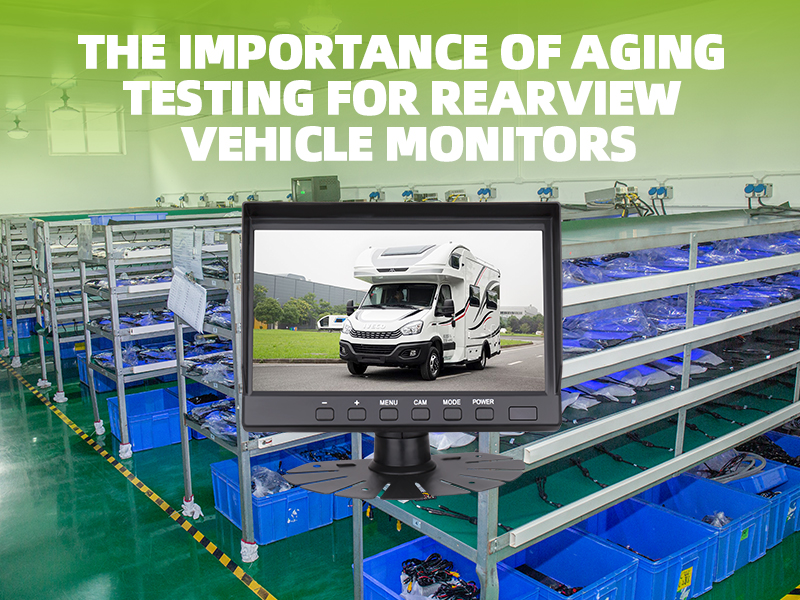
Simulazione ambientale: Nella camera di prova, posizionare il monitor retrovisore del veicolo a temperatura costante (40 °C) e umidità (90% umidità relativa) per simulare un ambiente ad alta temperatura e alta umidità.

Test ciclico: Collegare il monitor a una telecamera di retromarcia e far funzionare continuamente sia il monitor che la telecamera per 12 ore al giorno per simulare un utilizzo prolungato.

Prove di vibrazione: Utilizzare un tavolo vibrante per simulare le vibrazioni che un veicolo subisce su diverse condizioni stradali ed eseguire prove di vibrazione per una durata di 10 ore.

Prova di interferenza elettromagnetica: In una camera di prova per interferenze elettromagnetiche, esporre il monitor a radiazioni elettromagnetiche per simulare le interferenze che potrebbero essere causate dai dispositivi elettronici presenti all'interno del veicolo.

Monitoraggio continuo: Durante tutto il periodo di prova, monitorare e registrare costantemente le prestazioni e le condizioni del monitor, inclusi indicatori quali luminosità dello schermo, risoluzione e precisione dei colori.

Conclusione

I test di invecchiamento sono fondamentali per garantire le prestazioni e l'affidabilità dei monitor retrovisori per veicoli. Essi assicurano che i prodotti possano funzionare in modo stabile nell'uso reale, migliorando la sicurezza e la comodità dei conducenti.

Luview è un produttore professionale e fornitore di soluzioni per prodotti di sicurezza per la retromarcia con sede in Cina. Che tu stia cercando monitor o telecamere per veicoli, siamo la scelta giusta per te. Se stai cercando un fornitore adatto, contatta sales@luview.com per maggiori dettagli. Ci impegniamo a fornire prodotti di sicurezza per la retromarcia affidabili e di alta qualità per soddisfare le tue esigenze e offrire un'esperienza di guida più sicura per il tuo veicolo.