
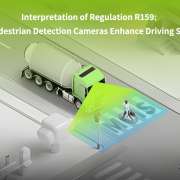
Interpretacja rozporządzenia R159: Kamery AI do wykrywania pieszych zwiększają bezpieczeństwo jazdy
With the acceleration of urbanization and the increasing complexity of road traffic conditions, the safety of pedestrians and cyclists has become a growing concern. In response to this, the United Nations Economic Commission for Europe (UNECE) has developed Regulation R159, known as the “Moving Off Information System” (MOIS). This regulation aims to enhance vehicles’ ability to detect pedestrians through advanced technological means, thereby reducing the occurrence of traffic accidents. This article will provide a detailed interpretation of the requirements of Regulation R159 and its impact on the automotive industry.

Overview of the R159 MOIS Regulation
Due to their larger and more complex body structures, commercial vehicles face unique hazardous driving situations. For instance, trucks and buses have significant blind spots in the front and on the sides, making it difficult for drivers to see pedestrians and cyclists on the road. Additionally, when turning left or right, the large turning radius of commercial vehicles can pose dangers to pedestrians and cyclists on either side.
To address these issues, the EU’s General Safety Regulation (GSR), issued in 2019, mandates that starting from July 6, 2022, commercial vehicles (categories M2, M3, N2, and N3) must be equipped with features such as pedestrian and cyclist detection, blind spot monitoring, and reversing assistance. These measures aim to significantly enhance the safety of commercial vehicle operation and protect vulnerable road users.
The UN ECE R159 Mobile Information Systems (MOIS) Regulation came into effect on June 10, 2021. It was mandatory for new M2, M3, N2, and N3 category models from July 6, 2022, and will be mandatory for newly registered M2, M3, N2, and N3 category vehicles from July 7, 2024.
Regulatory Requirements
According to the requirements of the R159 MOIS Regulation, the system must meet the following conditions:
1. Monitoring Range
The MOIS system must monitor the vehicle’s front blind spots and be capable of operating effectively at low speeds (0 to 10 kilometers per hour) to prevent collisions with pedestrians or cyclists.
2. Applicable Vehicle Types
The regulation applies to vehicles of categories M2, M3, N2, and N3, covering a range of models from small vans to large trucks.
3. Warning Methods
When the MOIS system detects pedestrians or cyclists in front of the vehicle, it can alert the driver using visual, acoustic, tactile, or a combination of signals to ensure the driver can take timely action.
4. Detection Range
The MOIS system must have an effective detection range from 80 centimeters to 3.7 meters in front of the vehicle’s front bumper (total length of 4.5 meters). This ensures that pedestrians or cyclists can be detected even at close distances.
5. Minimum Detection Width
To cover as many pedestrians and cyclists as possible, the MOIS system’s minimum detection width is specified as 4.3 meters. This helps ensure effective detection even on wider roads.
6. Technical Implementation
To meet the above requirements, vehicle manufacturers need to employ advanced sensing technologies and algorithms to enable MOIS functionality. This may include, but is not limited to:
(1)Radar Technology: Using radar waves to detect objects in front of the vehicle, calculating the distance of objects based on the time delay of reflected waves.
(2) Camera Systems: Combining computer vision technology to identify pedestrians and cyclists by analyzing images captured by cameras.
(3)Ultrasonic Sensors: Suitable for short-range detection, especially effective for close-range obstacle detection during low-speed maneuvers.
LUVIEW JY-814 AI Camera
In response to the R158/R159 regulations, LUVIEW has recently introduced the JY-814 AI Camera. Equipped with powerful AI algorithm models, the camera features built-in menu settings to accommodate various application scenarios of the R158/R159 regulations. The JY-814 AI Camera includes pedestrian and vehicle detection capabilities and provides audible and visual warning signals to alert drivers about pedestrians and approaching vehicles from both the front and rear. The camera also supports external WiFi communication and upgrade functions, allowing users to configure the camera’s settings, including standard, mirroring, and rotation, via WiFi.
Wnioski
The establishment of the R159 MOIS regulation reflects the international community’s strong commitment to traffic safety. With advancing technology, Luview anticipates the emergence of more similar regulations in the future, further promoting the development of intelligent transportation systems and creating a safer and more efficient road traffic environment. As consumers, when choosing a new vehicle, it is also advisable to focus on whether the vehicle is equipped with systems that meet MOIS standards to ensure the safety of oneself and others.


 Wprowadzenie
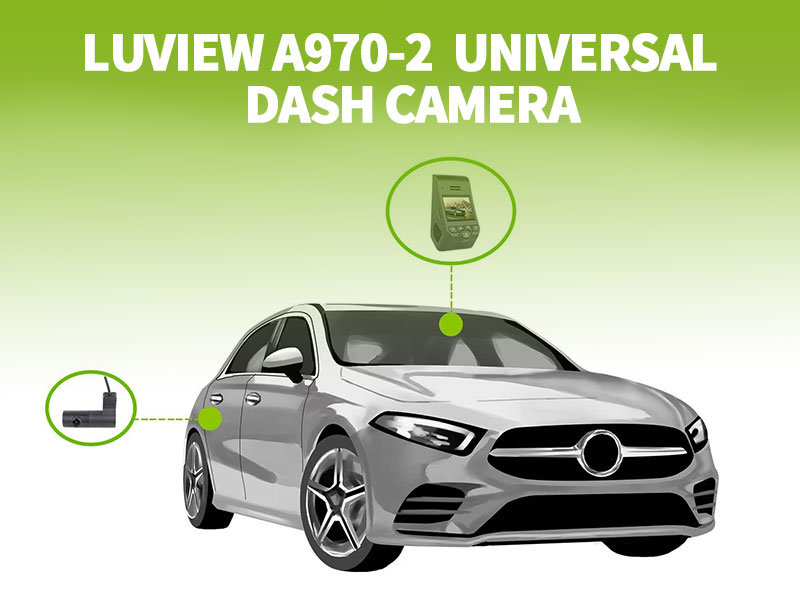 LUVIEW wprowadza na rynek nową kamerę samochodową A970-2. Ta kamera samochodowa łączy w sobie zaawansowane funkcje monitorowania parkowania, nagrywania w wysokiej rozdzielczości oraz zabezpieczeń, zapewniając kompleksową ochronę Twojego pojazdu.
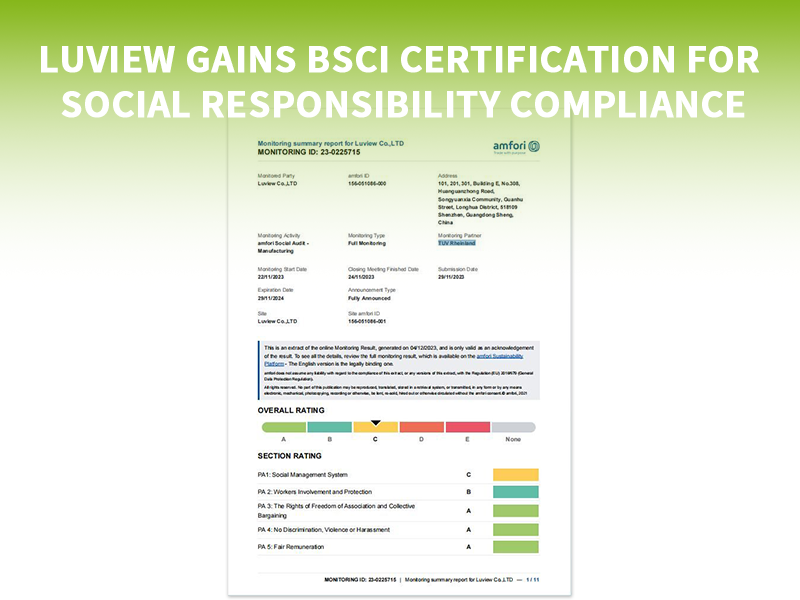 Luview z przyjemnością ogłasza, że uzyskaliśmy certyfikat Business Social Compliance Initiative (BSCI). Certyfikat ten nie tylko potwierdza nasze zaangażowanie w zakresie odpowiedzialności społecznej i zrównoważonego rozwoju, ale także świadczy o naszym dążeniu do utrzymania wysokich standardów.
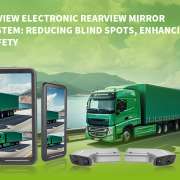
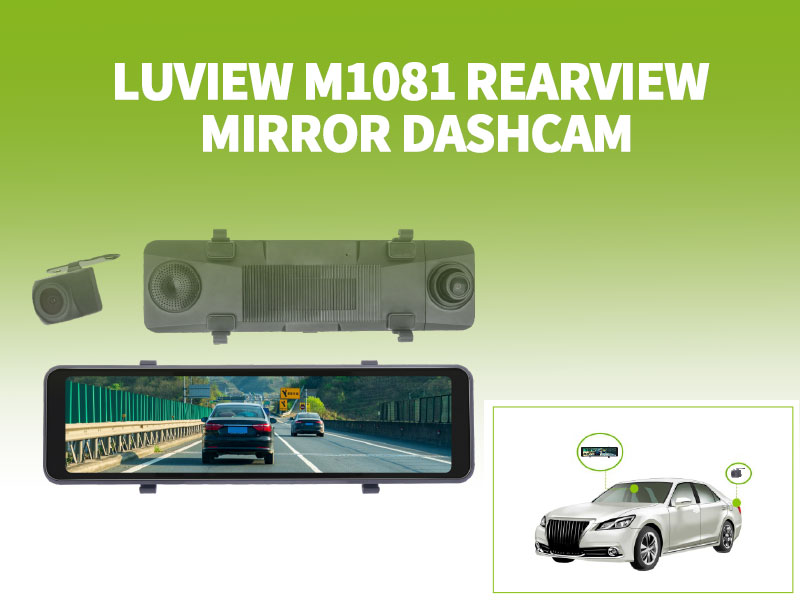 Typowe wyzwania, przed którymi stają kierowcy, to korki w mieście, konieczność szybkiej zmiany pasa ruchu, trudności z parkowaniem, niekorzystne warunki pogodowe, niebezpieczna jazda nocą i duże martwe punkty. Czy w takich sytuacjach tradycyjne lusterka wsteczne zapewniają wystarczającą widoczność i bezpieczeństwo? Czy zwiększa to ryzyko dla kierowców?


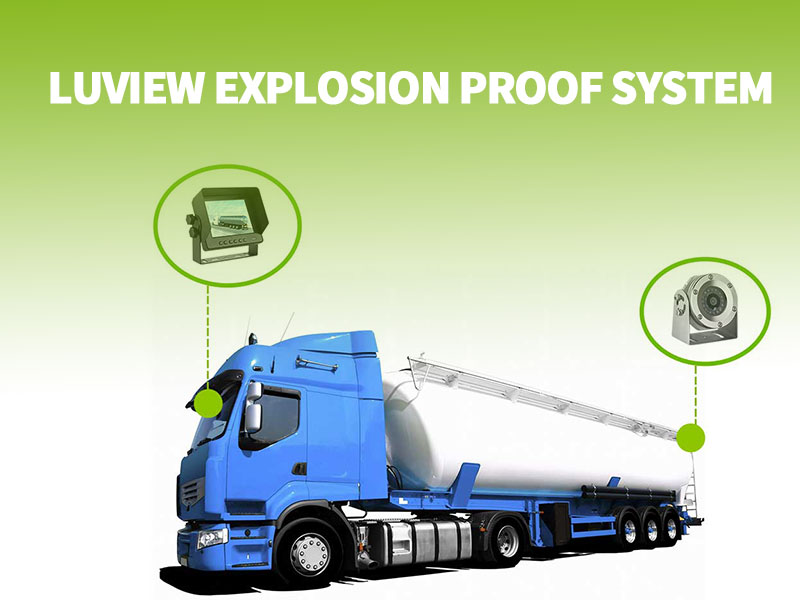 W nowoczesnym przemyśle i transporcie bezpieczeństwo jest zawsze najwyższym priorytetem. W środowiskach łatwopalnych, wybuchowych i niebezpiecznych zastosowanie systemów przeciwwybuchowych jest szczególnie istotne. Środowiska te obejmują scenariusze takie jak tankowce, pojazdy na gaz ziemny, wozy strażackie, pojazdy wojskowe, statki i inne miejsca, w których istnieje ryzyko wybuchu. Systemy kamer przeciwwybuchowych rozwiązują przede wszystkim kwestię martwych punktów, z którymi borykają się kierowcy w takich niebezpiecznych środowiskach.


 AGRITECHNICA ASIA to platforma w Tajlandii, która gromadzi globalne maszyny rolnicze i rozwiązania w zakresie technologii rolniczych. Wystawa przyciąga wystawców i odwiedzających z całego świata, zapewniając profesjonalistom z branży rolniczej możliwość poznania zaawansowanych maszyn i technologii rolniczych, ułatwiając wymianę i współpracę. Celem jest zwiększenie wydajności i jakości produkcji rolnej. Wystawa odbędzie się w dniach od 22 do 24 maja. Jako ekspert w dziedzinie rozwiązań rolniczych, Luview przedstawi szereg najnowszych rozwiązań w zakresie wydajności maszyn rolniczych i samochodowych systemów kamer cofania, aby przez trzy dni angażować się w dyskusje i wymiany z wystawcami i odwiedzającymi z całego świata.