
Como escolher a câmara de segurança sem fios adequada para a sua frota de empilhadores
Forklifts play a critical role in warehouses, logistics centers, and industrial environments. Even skilled operators face challenges due to blind spots, low-light conditions, and tight maneuvering spaces. A camera for a forklift can significantly improve safety and operational efficiency, but choosing the right system requires understanding key considerations.
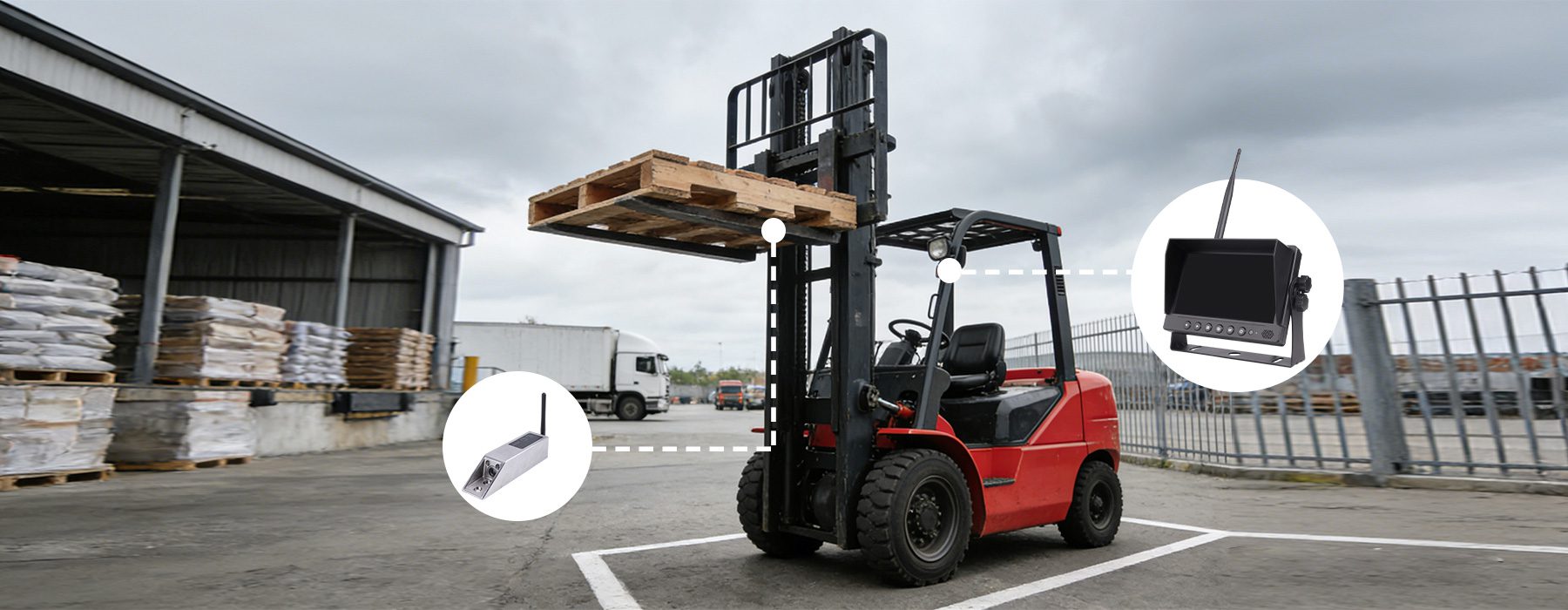
Key Considerations When Selecting a Forklift Camera
When looking for câmaras para empilhadores, it’s important to focus on factors that impact both safety and efficiency:
- Field of View
A wide-angle view helps operators see blind spots around the forklift, especially behind the load. Cameras with adjustable viewing angles provide flexibility to adapt to different load sizes and warehouse layouts.
- Image Clarity in Various Lighting Conditions
Warehouses often have uneven or low lighting. Look for cameras that provide clear images in both bright and dim environments. Night vision or LED-assisted cameras are particularly useful for early morning, late night, or poorly illuminated storage areas.
- Real-Time Monitoring
The camera system should provide instant video feedback to the operator’s monitor without noticeable lag. Real-time monitoring ensures the operator can make immediate adjustments to prevent collisions and safely handle loads.
- Wireless Reliability
Wireless connectivity is convenient, but stability is crucial. A reliable system must maintain a strong connection over the forklift’s operating area, even when navigating large warehouses or obstructed paths.
- Ease of Installation and Maintenance
Choose a system that can be installed with minimal disruption to your fleet. The camera should be robust and easy to maintain, minimizing downtime and maintenance costs.
- Compatibility with Your Fleet
Ensure the camera system works with the types of forklifts in your fleet and integrates easily with existing monitors or displays. Some systems offer flexible mounting options to fit various models.
Why Choose Luview Camera for Forklifts?
After considering these factors, Luview cameras for forklifts stand out as a practical solution for industrial operations. Designed for safety, precision, and reliability, Luview systems provide:
Enhanced Operational Precision: Visual guidelines on the monitor help operators position loads accurately.
Superior Visibility in Complex Environments: LED-assisted vision ensures clear images in low-light conditions.
Wireless Connectivity & Real-Time Monitoring: Instant video transmission displays blind spots in real-time.
Maximum Transmission Distance: Reliable wireless connection up to 60 meters supports large warehouse operations.
Conclusão
Choosing the right camera for forklifts requires evaluating the field of view, image clarity, real-time monitoring, wireless stability, installation, and fleet compatibility. For businesses seeking a dependable and high-performance solution, Luview cameras for forklifts combine these essential factors with features designed to enhance operational safety and efficiency.
By selecting a system that addresses these practical considerations, operators can navigate their work environment with confidence, reduce accidents, and handle materials more precisely. Luview provides the safety, clarity, and reliability your forklift fleet needs.