
Forklift Safety Camera Systems: How Wireless Solutions Reduce Blind Spots
Blind spots are a common issue in material handling facilities, especially when forklifts handle high loads or operate in reverse. In these scenarios, forkli̇ft kamera si̇stemleri̇ provide a visual extension that helps operators monitor areas that are otherwise hidden. A camera for forklift can be mounted to observe rear or elevated zones, supporting safer maneuvering during loading, unloading, and pallet stacking. From our experience, wireless solutions are particularly useful in reducing installation constraints, as they avoid complex cable routing and allow flexible deployment across different forklift models.
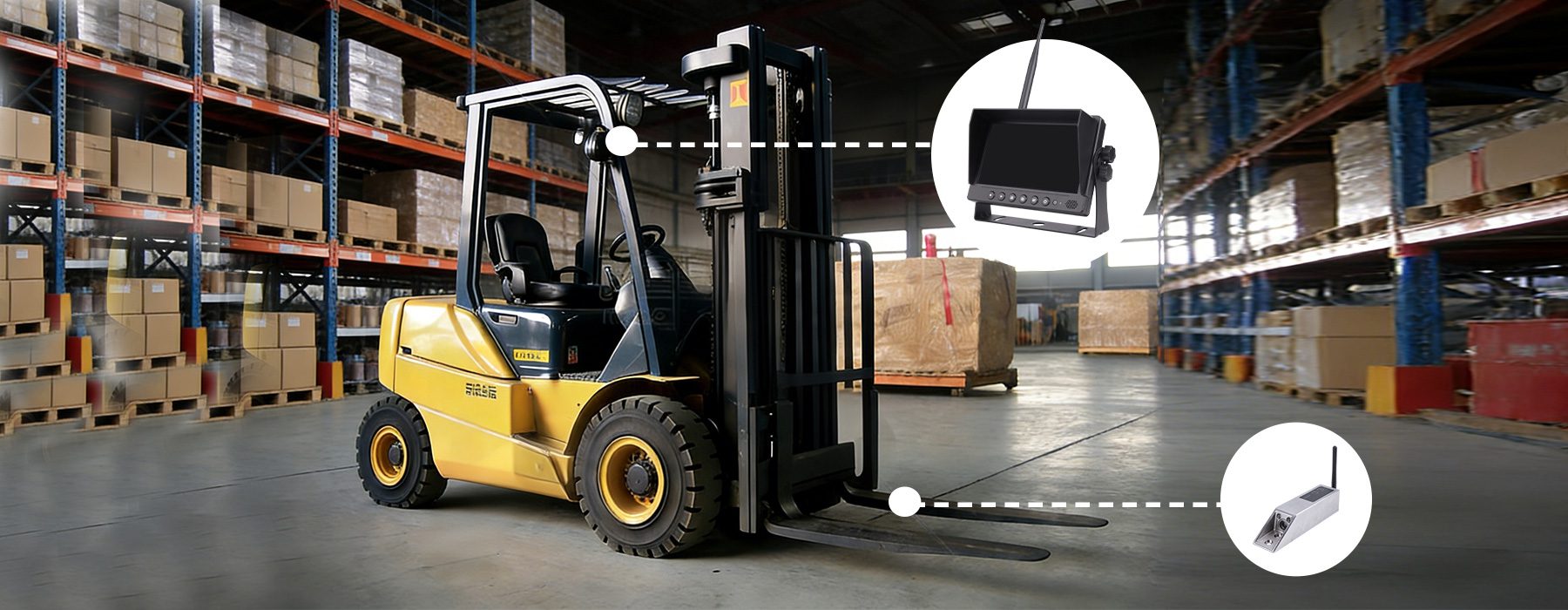
Wireless and Waterproof Design for Industrial Environments
Our kablosuz forklift kamerası solution is designed for industrial conditions where dust, moisture, and vibration are common. According to the product information, the system uses a waterproof camera housing and stable wireless transmission to maintain reliable image delivery during daily operations. This type of forklift camera systems setup allows forklifts to operate both indoors and outdoors without frequent maintenance interruptions. A camera for forklift in this configuration supports real-time monitoring, helping operators better judge distances and obstacles when visibility is limited.
Integration into Existing Safety Practices
Rather than replacing existing safety procedures, forklift camera systems are intended to complement them. Our approach focuses on integrating visual support into established operating routines, allowing trained drivers to make more informed decisions based on real-time visibility. By adopting a camera for forklift solution, facilities can enhance monitoring during reversing, stacking, pallet retrieval at height, and confined-space operation where blind spots are more likely to occur. This additional layer of visual assistance helps reduce operational uncertainty, improve coordination between drivers and ground staff, and support smoother material flow. It also contributes to minimizing minor collisions, load damage, and avoidable downtime. This aligns with our broader goal of supporting consistent, practical, and sustainable safety improvements for industrial customers across different warehouse and logistics environments.
Conclusion: Wireless Camera Systems as a Practical Safety Tool
In conclusion, wireless forklift camera systems offer a practical way to reduce blind spots in material handling environments without overcomplicating operations. A camera for forklift helps improve visibility in critical areas such as loading zones, narrow aisles, and high-rack storage positions, while wireless and waterproof features support stable use in demanding industrial settings. By minimizing installation complexity and reducing cable-related maintenance issues, these systems allow fleet operators to deploy upgrades efficiently across multiple vehicles. At Luview, we continue to develop solutions that fit real-world workflows, focusing on reliable performance, long-term durability, and seamless compatibility with professional forklift operations and safety management standards.