
How to Choose the Right Forklift Wireless Camera System for Your Fleet
Managing visibility and operational safety is a long-term concern for fleet operators, especially in warehouses and logistics centers with high forklift traffic. When we evaluate camera solutions for industrial vehicles, the decision is rarely about adding a single device. Instead, it involves understanding how a forklift safety camera system integrates with existing workflows, vehicle types, and operator habits. For experienced users, selecting the right forklift cameras requires balancing signal stability, durability, and installation flexibility while keeping daily operations uninterrupted.
Understanding Wireless Requirements in Forklift Applications
Wireless transmission is often the first factor we consider when choosing a forkli̇ft güvenli̇k kamera si̇stemi̇. In busy facilities, forklifts frequently move between indoor and semi-outdoor areas, which means interference resistance and transmission distance matter more than consumer-grade resolution specifications. A wireless solution reduces the need for complex cable routing and minimizes downtime during installation. From our perspective, forklift cameras designed for industrial use should support stable real-time video under vibration and frequent vehicle movement, ensuring operators can rely on consistent visual feedback rather than intermittent signals.
Durability and Environmental Adaptability
Industrial environments expose equipment to dust, moisture, and temperature variation. When selecting forkli̇ft kameralari, we focus on whether the system is designed with waterproof housings and shock-resistant structures. This is particularly relevant for operations involving cold storage, loading docks, or outdoor yards. A well-engineered forklift safety camera system should maintain performance without frequent recalibration or maintenance. Durability is not about extreme specifications, but about predictable behavior over long operating cycles, which experienced fleet managers value most.
Practical Integration with Fleet Operations
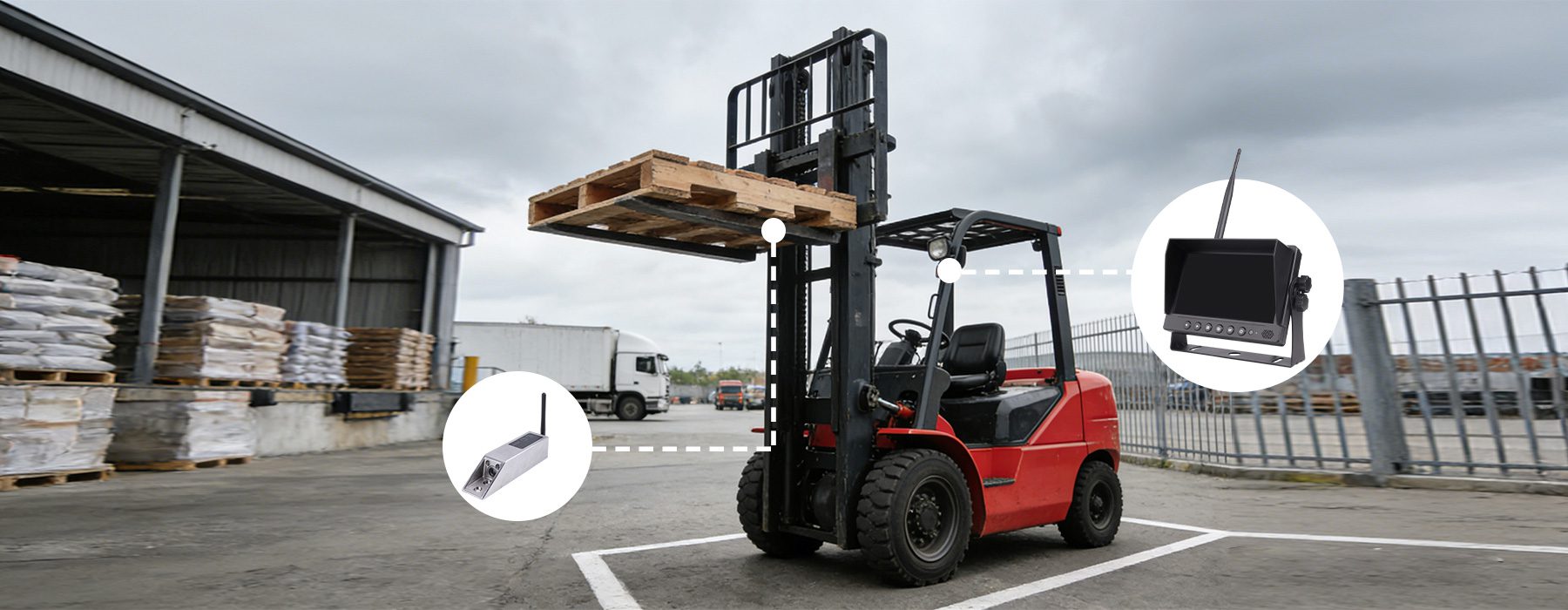
System compatibility plays a key role in long-term deployment. We look for camera solutions that can be installed across different forklift models without extensive modification. The waterproof wireless forklift camera system featured on our website reflects this approach, offering a compact camera unit and a dedicated monitor designed for efficient operation in industrial vehicles. For fleet environments, forklift cameras should support quick pairing and clear image transmission, allowing operators to adapt without extended training. This practical integration helps ensure the forklift safety camera system contributes to smoother daily operations rather than becoming an isolated add-on.
Conclusion: Aligning System Choice with Fleet Needs
Choosing the right wireless camera solution is ultimately about aligning technical features with real operational demands. For experienced B2B customers, evaluating a forklift safety camera system means looking beyond basic specifications and focusing on durability, signal reliability, and installation efficiency. By selecting forklift cameras that are purpose-built for industrial environments and compatible with diverse fleets, we can support safer maneuvering and more controlled workflows. At Luview, our approach emphasizes practical design and stable performance, helping fleet operators make informed decisions that fit their long-term operational strategies.