
Night Vision Wireless Camera System for Safe Driving in Low-Light Conditions
Operating vehicles and machinery in low-light conditions presents ongoing challenges for professional users across agriculture, construction, and industrial transport. At Luview, we work with B2B customers who require stable visual support during night operations without increasing system complexity. In these environments, limited visibility often affects reversing accuracy, equipment alignment, and overall situational awareness. A properly designed backup camera wireless system plays a practical role in addressing these issues by providing consistent rear visibility when ambient light is insufficient. By focusing on night vision performance and wireless transmission reliability, we support safer driving and operation in real working conditions rather than ideal laboratory settings.

Night Vision Technology and Wireless Stability in Professional Use
Night vision capability is essential for maintaining image clarity when headlights or external lighting are limited. In professional vehicle applications, a rear view wireless camera system must deliver usable images without delay, distortion, or signal loss. Infrared night vision allows cameras to capture objects and terrain details beyond the reach of visible light, while AHD signal processing helps maintain image definition on larger monitors. Wireless transmission reduces dependence on long cable runs, which are often exposed to vibration, dust, and mechanical stress. From our experience, system stability is as important as image brightness, especially for operators who rely on continuous visual feedback during extended night shifts.
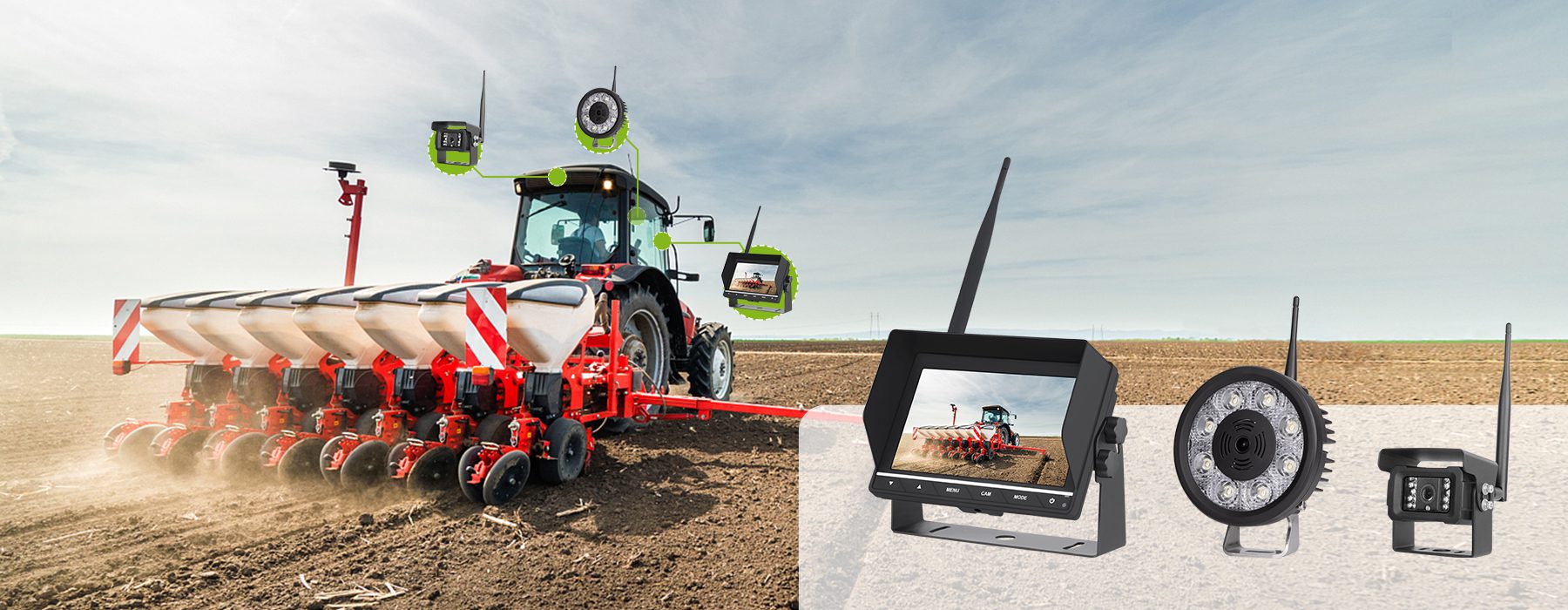
Application of Wireless Night Vision Systems in Agricultural Machinery
Agricultural machinery frequently operates before sunrise or after sunset, making rear visibility a critical safety factor. Our 7-inch AHD night vision wireless camera system with work light is developed to address these conditions in a practical manner. The system integrates infrared night vision with a built-in work light to support reversing and attachment operations in dark fields. Wireless installation allows flexible placement on tractors, harvesters, and other equipment without modifying existing structures. The 7-inch monitor provides sufficient viewing area for professional operators, while the camera’s wide-angle design supports consistent coverage of blind zones. As a backup camera wireless system, it assists experienced users in maintaining control during low-speed maneuvers where precision matters most.
Conclusion: Enhancing Low-Light Safety Through Practical Wireless Design
Safe driving and equipment operation in low-light environments depend on reliable visual information rather than added operational burden. By combining night vision imaging, wireless transmission, and application-focused hardware design, we aim to support professional users facing real-world visibility challenges. Our approach to the rear view wireless camera system emphasizes compatibility with existing vehicles, stable performance, and suitability for long working hours. Through continuous refinement of wireless night vision solutions, Luview remains focused on helping B2B customers improve operational safety and confidence when working in low-light conditions.