How Does the 360° AI AVM System Resolve Safety Hazards in Open-Pit Mining Operations?缩略图

How Does the 360° AI AVM System Resolve Safety Hazards in Open-Pit Mining Operations?

Open-pit mining is globally recognized as a high-risk working environment. Characterized by complex terrain, dense heavy machinery and limited visibility, large vehicles such as mining trucks, excavators and loaders come with extensive blind areas. This easily leads to crush and collision accidents, resulting in casualties and property losses.

Traditional rear-view cameras and rear view mirrors can no longer cope with the complex round-the-clock multi-directional operating conditions at mining sites. Against this backdrop, the 360° AI AVM system has become a core active safety configuration for mining vehicles.
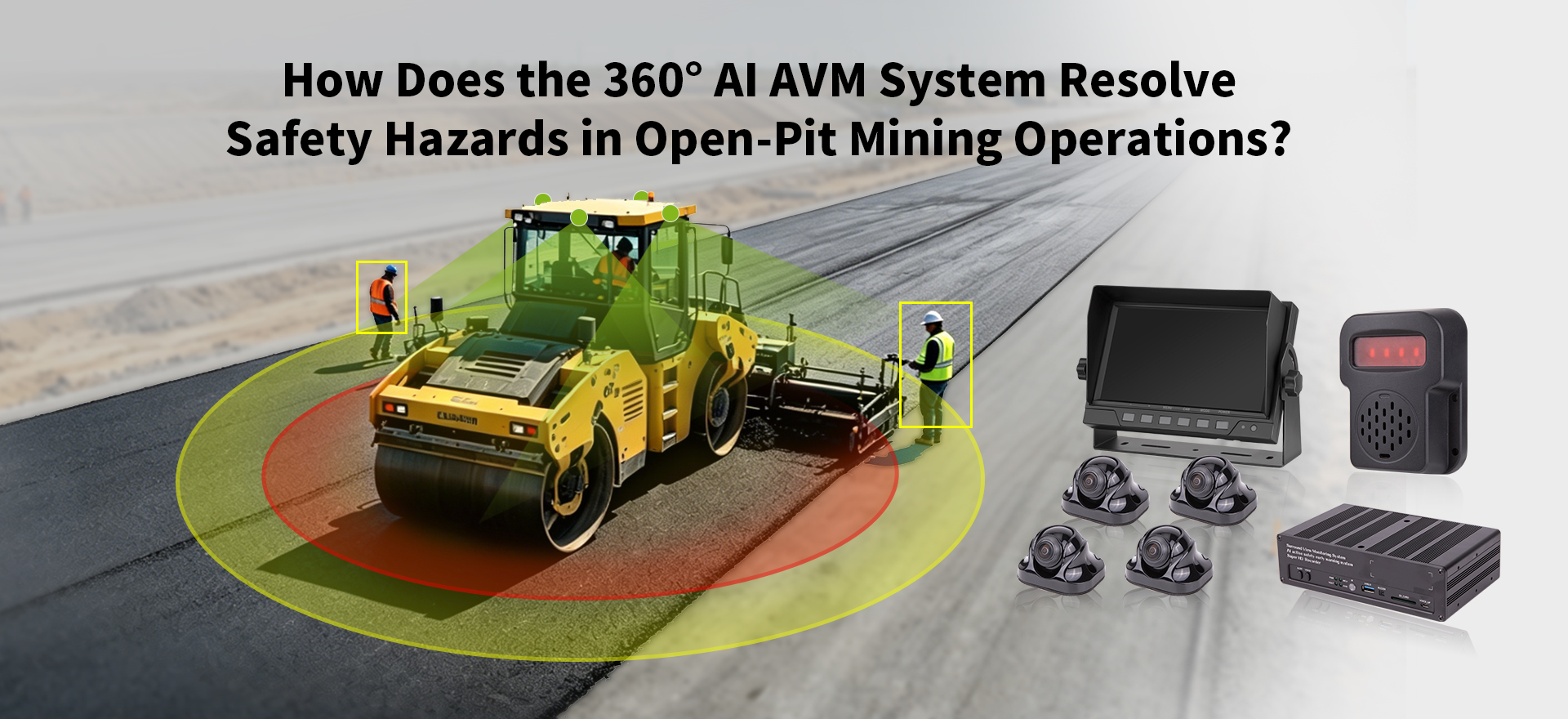
How Does the 360° AI AVM System Resolve Safety Hazards in Open-Pit Mining Operations?插图

I. Severe Blind Spot Issues Prevalent in Open-pit Mines

Most large off-highway mining trucks stand over 4 meters tall with elevated driver cabins, leaving drivers with severely restricted natural vision. When reversing, turning or making U-turns in narrow mine roadways, massive blind zones exist all around the vehicle:

  • Front blind area: No visible view within 5 to 8 meters ahead, putting on-foot workers at great risk.
  • Side blind area: The extra-wide vehicle body creates large vision gaps, so approaching machinery and vehicles cannot be detected in a timely manner.
  •  Rear blind area: Reversing and unloading are frequent operations at mines, and the rear section is where workers often move around.
  •  Harsh working conditions: Mining sites operate 24/7. Insufficient lighting and heavy dust at night further impair drivers’ visibility.

Relying merely on driving experience and horn warnings can no longer meet modern mine safety production standards.

II. 360° AI AVM System: Full Peripheral Awareness

The 360° AI AVM system captures footage via multiple wide-angle cameras mounted around the vehicle. With advanced image stitching algorithms, it generates a real-time top-down panoramic view and displays the image on the on-board monitor, enabling drivers to fully monitor the surroundings at all angles.

The Luview JY-FV04 360° AI AVM system is tailor-made for engineering and mining machinery, with its technical architecture fully optimized for mining operations.

III. 8-Channel High-Definition Cameras for Zero Blind Spots

The JY-FV04 360° AI AVM system supports up to 8 channels of AHD 1080P high-definition cameras. Four channels are dedicated to panoramic image stitching, while the other four serve as independent monitoring channels for targeted surveillance of cargo boxes, external attachments and critical hazard zones.

Equipped with 210° ultra-wide-angle fisheye lenses, all cameras work seamlessly together to eliminate stitching blind spots commonly seen in conventional solutions.

All cameras feature IP68 ingress protection, resisting dust accumulation, mud impact and high-pressure water washing, and delivering stable imaging continuously under harsh mining conditions.

IV. One-Click Calibration for Easy Maintenance & Consistent Image Accuracy

Long-term heavy loads and rough road conditions may cause vehicle body deformation and camera displacement. The JY-FV04 360° AI AVM system is integrated with a one-click calibration function. No professional tools or technicians are required; on-site staff can quickly recalibrate panoramic images, greatly simplifying maintenance and ensuring accurate imaging around the clock.

V. AI Vision Warning for Proactive Risk Prevention

Panoramic video monitoring is just the basic function. The built-in AI vision warning module serves as the core of safety protection. It identifies pedestrians and surrounding vehicles in real time. Once potential hazards are detected approaching, the system triggers visual and audible alerts automatically. It upgrades conventional passive observation to active early warning, effectively shortening drivers’ response time.

VI. Ultrasonic Radar Complementation for All-Weather Reliable Protection

Heavy dust, strong glare and low light at night may affect camera performance. For enhanced perception, the system can be optionally fitted with a 16-point four-direction ultrasonic radar:

  • While driving, the radar provides full-scan detection up to 2.5 meters.
  •  After vehicle power-off and arming, the detection range is reduced to 0.3 meters to activate anti-theft alarms and prevent accidental collisions during parking.

The radar supports wide voltage input from DC 12V to 33V, with a peak power consumption of only 0.2W, bringing almost no extra load to the original vehicle circuit.

Furthermore, the system integrates BSD (Blind Spot Detection) and LCA (Lane Change Assist). Instant alerts will be issued when vehicles enter the side and rear blind areas, significantly cutting collision risks during passing and parallel operation in mine roadways.

SSS

Q1: Can the 360°AVM system effectively prevent collision and run-over accidents in open-pit mines?

A: Definitely. Mining vehicles have large blind spots due to their huge size. Luview system delivers full 360° vision via wide-angle fisheye cameras, paired with AI detection and ultrasonic radar. It provides early warning for pedestrians and nearby vehicles, greatly cutting down safety accidents and property loss.

Q2: Are the cameras and system durable enough for dusty, muddy mining environments and high-pressure washing?

A: All cameras are rated IP68, fully resistant to dust, mud impact and high-pressure water cleaning. The system supports wide voltage input and works stably under harsh conditions like heavy dust, vibration and extreme temperatures.

Q3: Will it be difficult to recalibrate the panoramic view if cameras shift from vehicle vibration and heavy loads?

A: No professional tools or technicians are required. The one-click calibration function allows on-site staff to quickly re-calibrate image stitching. It corrects frame deviation caused by vehicle deformation or camera displacement easily.

Q4: What extra safety features does this system offer for comprehensive mine protection?

A: Besides 360° panoramic view, it is equipped with AI visual warning, BSD blind spot detection and LCA lane change assist. The optional 16-probe ultrasonic radar works as backup in low-light, dusty or strong light conditions, and also supports anti-theft alarm when vehicles are parked.

Q5: Will multiple cameras and radars cause extra load on the vehicle’s electrical system?

A: Power consumption is extremely low. The ultrasonic radar only consumes 0.2W at maximum, and the system supports DC 12~33V wide voltage. It brings almost no extra burden to the original vehicle circuit, while supporting up to 8 AHD 1080P camera channels.
How Do AI Cameras Improve Safety & Productivity for Sprinkler Trucks?缩略图

How Do AI Cameras Improve Safety & Productivity for Sprinkler Trucks?

Ⅰ. Hidden Safety Risks of Sprinkler Trucks in Urban Road Operation

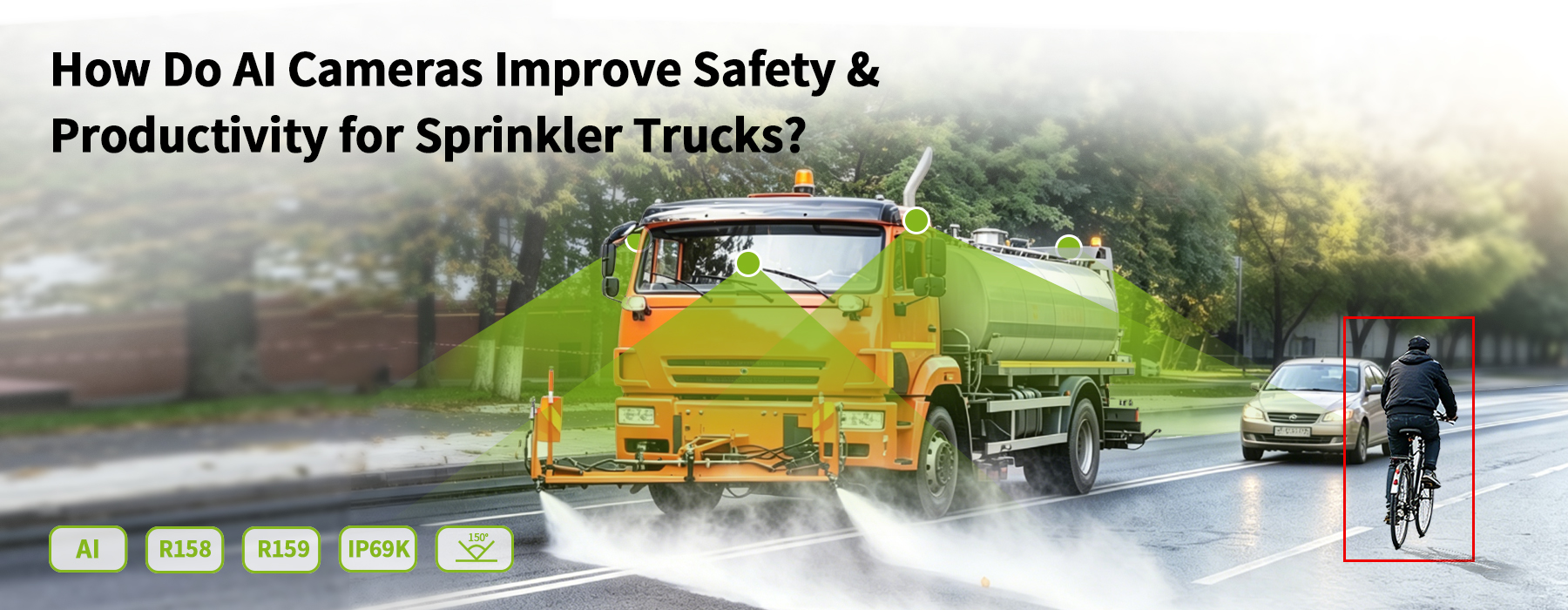
Sprinkler trucks are easily overlooked in urban safety management systems. Travelling at medium and low speeds across urban arterial roads, residential lanes and construction zones, they generate unique hazards rarely covered by conventional fleet safety standards during operation: extensive side blind zones formed during water spraying and high exposure risks for pedestrians along curbs. The deployment of Luview AI cameras fundamentally improves this risky scenario.

How Do AI Cameras Improve Safety & Productivity for Sprinkler Trucks?插图

Ⅱ. Blind Spots Stem from Inherent Vehicle Structure Rather Than Human Error

Blind zones on sprinkler trucks are structural defects instead of operational mistakes.

Increasing drivers’ frequency of rearview mirror checks cannot offset inherent dead zones caused by vehicle geometry. Typical large sprinkler trucks measure 7–12 meters in length, with water tanks extending toward rear corners and creating wide ground-level blind areas where pedestrians, cyclists and children frequently appear. Traditional rear-view cameras only deliver limited live footage, forcing drivers to respond based on real-time screen observation. Luview AI camera system enables automatic detection and instant alert regardless of whether the driver is monitoring the display; the system triggers warnings autonomously once pedestrians enter dangerous areas.

Ⅲ. On-device Local AI Calculation & Technical Specifications of Intelligent Detection

3.1 Definition of Hardware-based Vehicle AI Detection

The term “AI camera” is loosely used across the industry. For professional vehicle safety hardware represented by Luview JY-814 AI BSD Camera, AI detection carries a definitive technical definition: an embedded inference processor runs trained deep-learning algorithms directly onboard the camera, analyses frame-by-frame video streams and completes all computing locally.

3.2 Core Technical Parameters of JY-814 AI Camera

Equipped with Anchor-Free deep learning algorithm, Luview JY-814 achieves over 96% accuracy for pedestrian and vehicle identification with approximately 50ms system response latency. It features 145° horizontal viewing angle, 80° vertical viewing angle and 165° diagonal viewing angle, alongside a maximum detection range of 28 meters; single-side installation fully covers critical rear-side hazard zones of large sprinkler trucks. The full-HD 1920×1080 resolution camera tracks up to 20 moving targets simultaneously, perfectly matching real-world road conditions with crowds of pedestrians along urban intersections and cleaning routes.

Ⅳ. Three-tier Audible & Visual Warning to Avoid Driver Alert Fatigue

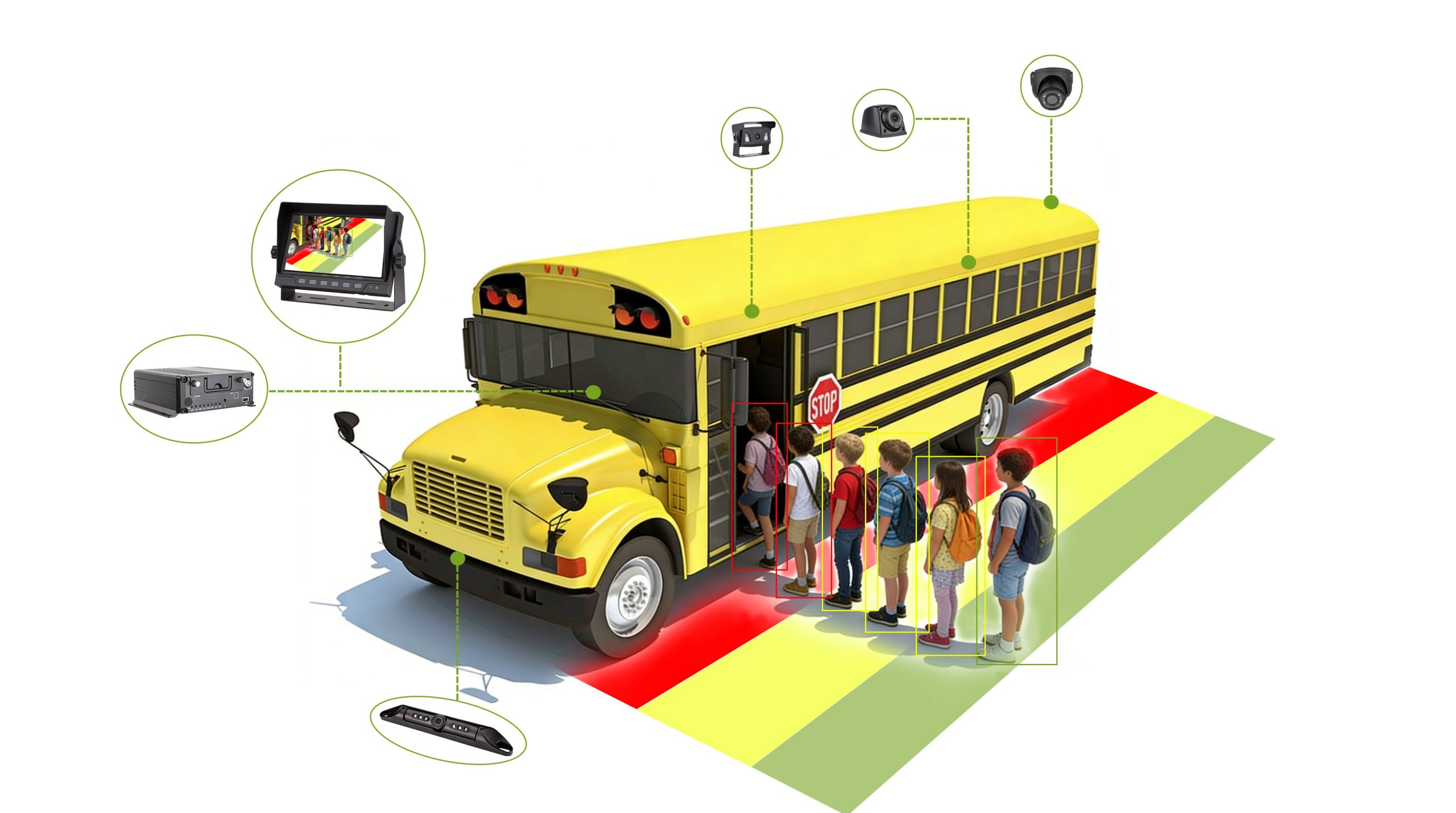
When cyclists or vehicles enter the Green Monitoring Zone, the system triggers a slow intermittent alert tone: Beep————Beep————.

When detected targets move into the middle Yellow Warning Zone, the system outputs a faster, intensified alert tone: Beep——Beep——Beep——.

When targets enter the inner Red Danger Zone, the system activates the most urgent rapid alarm tone: Beep-Beep-Beep-Beep. The audible prompt works inside the cab. When connected with an external warning light bar, it provides pedestrians outside with dual visual and audible warnings. This tiered warning mechanism effectively avoids driver alert fatigue while ensuring immediate and clear reminders for real close-range safety hazards.

Ⅴ. AI-linked Intelligent Water Control: Reduce Complaints, Improve Efficiency and Empower Municipal Operations

Besides safety improvement, operational productivity stands as another core priority. Conventional spraying operation relies entirely on drivers’ subjective judgement to manually adjust or shut off water output upon spotting nearby pedestrians, resulting in two prevalent industry pain points:

First, delayed manual intervention often leads to accidental water splashing on passers-by, triggering continuous municipal complaints and potential legal liabilities in certain regions.

Second, overly cautious drivers cut water supply prematurely at the sight of roadside activities, causing incomplete pavement coverage and redundant repeated routes.

Luview AI camera system resolves both issues via seamless integration with truck water valve control units. Once pedestrians are captured within detection coverage, the system automatically throttles down or pauses water spraying and resumes normal operation after targets leave monitored areas. Drivers can fully focus on vehicle control and traffic conditions with automatic spray regulation handled by the intelligent system.

Measurable operational benefits include fewer public complaints, expanded daily cleaning coverage and reduced cognitive burden for drivers during peak hours. For municipal fleets managing dozens or hundreds of multi-shift sprinkler vehicles, such autonomous operation delivers tangible efficiency gains rather than theoretical benefits.

Ⅵ. Dual IP69K High-protection Product Options for Harsh Sprinkler Working Conditions

Sprinkler trucks operate under extremely tough environments including persistent high-pressure water flushing during spraying, repeated high-pressure washing for maintenance and year-round all-climate deployment requirements.

Luview JY-814 AI camera features IP69K ingress protection – the highest available rating for automotive equipment, certified per ISO 20653 and DIN 40050-9 standards to withstand multi-angle high-temperature high-pressure water jet impact. For sprinkler-mounted cameras that may be directly exposed to water spray during working cycles, IP69K is a mandatory baseline specification instead of an optional premium upgrade.

Operating temperature spans from -20°C to +70°C to accommodate all-season operation across freezing winters and scorching summers. Minimum illumination reaches 0.1Lux under daylight and 0Lux at night via built-in active IR illumination, supporting pre-dawn early-shift operations when regular visible-light cameras fail completely under darkness.

For applications requiring high-definition wide-angle rear monitoring only (installed on rear of water tank without AI detection function), Luview JY-810 is available as a cost-effective alternative: IP69K-rated 150° ultra-wide-angle camera with Sony CMOS image sensor, same -20°C~+70°C working temperature range, serving as complementary rear-view accessory paired with AI side-mounted cameras.

Ⅶ. Authoritative Certifications to Comply with Global Municipal Vehicle Regulatory Standards

Regulatory requirements for vehicle vision systems for municipal vehicles keep tightening globally, especially across Europe. UN ECE R158 (Rear Vision System) and R159 (Moving Off Information System) set explicit performance criteria for vehicle detection and early warning equipment. Luview JY-814 AI camera holds full certification against above standards and helps municipal operators complete regulatory compliance documentation for project tendering.

SSS

Q1: Standard rear-view cameras are pre-installed on water sprinkler trucks. Why upgrade to Luview AI BSD cameras?

A: Conventional rear-view cameras only output live footage, forcing drivers to constantly monitor display screens to avoid blind spot hazards. Sprinkler trucks feature inherent structural blind spots along the side and rear, where pedestrians and children often fall out of sight. Powered by deep-learning algorithms, the JY-814 AI camera autonomously detects pedestrians and vehicles with 3-zoned audible & visual warning alerts. It triggers active warnings without continuous screen watching, fundamentally resolving innate visibility drawbacks caused by vehicle body design.

Q2: Can the Luview JY-814 AI camera link with the sprinkler’s water valve for automatic water control?

A: Yes. The system connects to the factory electronic control unit of the sprinkler truck. Once the AI identifies pedestrians entering the detection zone, the system automatically throttles down or shuts off water discharge; water supply resumes automatically after pedestrians move out of coverage. This prevents customer complaints from accidental water splashing on passers-by and avoids incomplete road cleaning caused by drivers cutting off water prematurely.

Q3: Subject to continuous high-pressure water jetting during daily operation, does the JY-814 deliver reliable waterproof durability?

A: The JY-814 is rated IP69K, the top-tier protection grade for automotive applications, compliant with ISO 20653 and DIN 40050-9 standards. It withstands multi-angle high-temperature high-pressure washdown. Operating temperature ranges from -20℃ to +70℃ to cope with all-weather conditions, perfectly suited for harsh working scenarios including persistent sprinkling and full-vehicle high-pressure cleaning.

Q4: How to select between IP69K-rated JY-814 and JY-810 cameras?

A: ① Select JY-814 for side mounting and AI blind-spot pedestrian BSD warning: 145° horizontal field of view, 28m detection range and tiered audio-visual alerts, optimized for intelligent BSD recognition.

② Choose JY-810 for fixed rear installation as basic HD rear-view monitoring without AI detection: equipped with 150° ultra-wide-angle Sony CMOS lens for supplementary rear vision.

Q5: Does the product comply with EU municipal vehicle regulations for export on European sanitation sprinkler projects?

A: Luview JY-814 holds UN ECE R158 & R159 certification, meeting EU statutory requirements for blind-spot and moving-off warning on European sanitation vehicles. It supports overseas municipal fleets for regulatory filing and project approval.


Do Fleet Vehicle Camera Systems Improve Driver Behavior?缩略图

Do Fleet Vehicle Camera Systems Improve Driver Behavior?

Every fleet manager has asked this question at some point. You install cameras, drivers become aware they are being watched, and for a few weeks, incident reports drop. But does that change last? More importantly, does technology actually transform driving habits, or simply encourage temporary compliance? We have spent years studying these patterns across trucking, delivery, and transit fleets. The evidence we have gathered points to a clear answer: yes, fleet vehicle camera systems significantly improve driver behavior—but only when paired with intelligent recording, remote oversight, and actionable data. As a manufacturer of advanced mobile DVR solutions, we at Luview have seen the difference a well-designed MDVR sistemi can make.

LUVIEW DMS+ADAS+BSD MDVR KAMERA SİSTEMİ

Visibility Alone Is Not Enough—Context Matters

Simply mounting cameras does not guarantee better driving. Drivers quickly learn when a system merely records locally without transmission or review. The real behavioral shift occurs when drivers understand that their actions can be reviewed remotely and in context. Our fi̇lo araç kamera si̇stemleri̇ integrate with a powerful MDVR system that supports real-time video preview and remote parameter configuration via mobile apps, client software, and fleet management platforms. When drivers know that a fleet manager can monitor live footage from anywhere—checking speed, braking, cornering, and following distance—the incentive to drive carefully becomes constant, not periodic. We have seen clients reduce harsh braking events by over 40% within three months of deploying such systems.

How IO Alarms and Vehicle Integration Reinforce Safety

Better behavior also comes from immediate feedback, not just delayed reviews. The JY-DV8004 all-in-one MDVR system features six channels of IO alarm input and supports RS232/RS485 connectivity. This means the system integrates with external sensors—door contacts, reverse signals, turn indicators, or collision detectors. When a driver executes a risky maneuver, the MDVR system can trigger an immediate in-cab alert or tag the event for later coaching. Over time, drivers learn to avoid the behaviors that generate alarms. Unlike passive recording, this active feedback loop reshapes habits at the moment they occur. As one of the manufacturers focused on behavior modification through technology, we have found this feature particularly effective for new drivers or those with recurring safety violations.

Optimized Recording Builds Trust and Accountability

Behavioral improvement also depends on fair, reliable evidence. Drivers will resist a system that corrupts footage or fails to capture critical moments. Our fleet vehicle camera systems utilize an optimized file system that enhances disk read/write efficiency, supporting stable video recording and playback while minimizing data corruption risks. When drivers trust that the recording is accurate and tamper-proof, they accept coaching based on hard evidence. This transparency reduces disputes and defensive attitudes, replacing blame with constructive feedback.

Our Recommendation for Fleets Serious About Behavior Change

The question is not whether cameras improve behavior, but which MDVR system delivers the combination of live monitoring, sensor integration, and reliable recording that truly changes habits. At Luview, we recommend our JY-DV8004 4-channel AI all-in-one MDVR for fleet management. It gives you remote visibility, real-time alerts, and tamper-proof evidence—all essential tools for building a safety-first driving culture. Contact us to learn how our fleet vehicle camera systems can transform your drivers’ habits and your bottom line.

Is 4-Channel DVR Enough for Heavy-Duty Trucks?缩略图

Is 4-Channel DVR Enough for Heavy-Duty Trucks?

Fleet operators managing heavy-duty trucks face increasing pressure to enhance safety, monitor driver behavior, and maintain reliable evidence records. Choosing the right MDVR sistemi is a critical part of this process. Many businesses ask whether a 4 channel vehicle DVR is sufficient for their operational needs, or if more complex systems are required. We believe the answer depends on application scenarios, but in many cases, a well-designed 4-channel solution can deliver excellent value and performance.

LUVIEW DMS+ADAS+BSD MDVR KAMERA SİSTEMİ

Coverage Needs and Practical Applications

Heavy-duty trucks typically require monitoring of key angles such as the front, rear, and both sides of the vehicle. A 4 kanallı araç DVR is often capable of covering these essential viewpoints, making it a practical choice for many fleets.

When integrated into a robust MDVR system, four channels can provide comprehensive visibility without unnecessary complexity. For logistics fleets, construction vehicles, and long-haul trucks, this setup strikes a balance between operational efficiency and safety coverage. However, fleets with highly specialized requirements—such as passenger transport or hazardous material handling—may require additional channels for interior or cargo monitoring.

Storage Efficiency and Video Quality

Video storage is a major consideration when selecting an MDVR system. Continuous recording from multiple cameras can quickly consume storage capacity, especially when high-definition footage is required.

A modern 4 channel vehicle DVR equipped with advanced compression technologies such as H.265 and H.264 can significantly reduce storage demands while maintaining image clarity. This allows fleets to retain longer recording periods without increasing hardware costs. Additionally, support for large-capacity storage solutions, such as SATA hard disks, allows that businesses can scale their data retention based on operational needs. Efficient storage management is one of the key advantages of choosing a high-quality MDVR system.

Cost-Effectiveness and System Simplicity

For many fleet operators, cost control and ease of deployment are just as important as performance. A 4 channel vehicle DVR offers a streamlined solution that is easier to install, maintain, and operate compared to higher-channel systems.

By focusing on essential monitoring points, businesses can reduce upfront investment while still benefiting from a reliable MDVR system. Fewer components also mean lower maintenance requirements and reduced risk of system failure. This simplicity makes 4-channel solutions particularly attractive for small to mid-sized fleets or companies looking to standardize their vehicle safety systems.

Making the Right Choice for Fleet Operations

Determining whether a 4 channel vehicle DVR is enough ultimately depends on the specific operational demands of each fleet. We find that for many heavy-duty truck applications, a well-optimized MDVR system with four channels provides the ideal balance of coverage, efficiency, and cost.

As Luview, we offer the JY-DV8004 4 channel vehicle DVR, an all-in-one MDVR system designed for modern fleet management. With H.265/H.264 compression, it maximizes storage efficiency while maintaining high-quality video. Its support for SATA hard disks enables extended recording durations, making it a practical and scalable solution. We are committed to helping our partners deploy reliable MDVR system solutions that enhance safety, improve oversight, and support long-term fleet success.

Is Wireless Backup Camera Reliable for Long Hauls?缩略图

Is Wireless Backup Camera Reliable for Long Hauls?

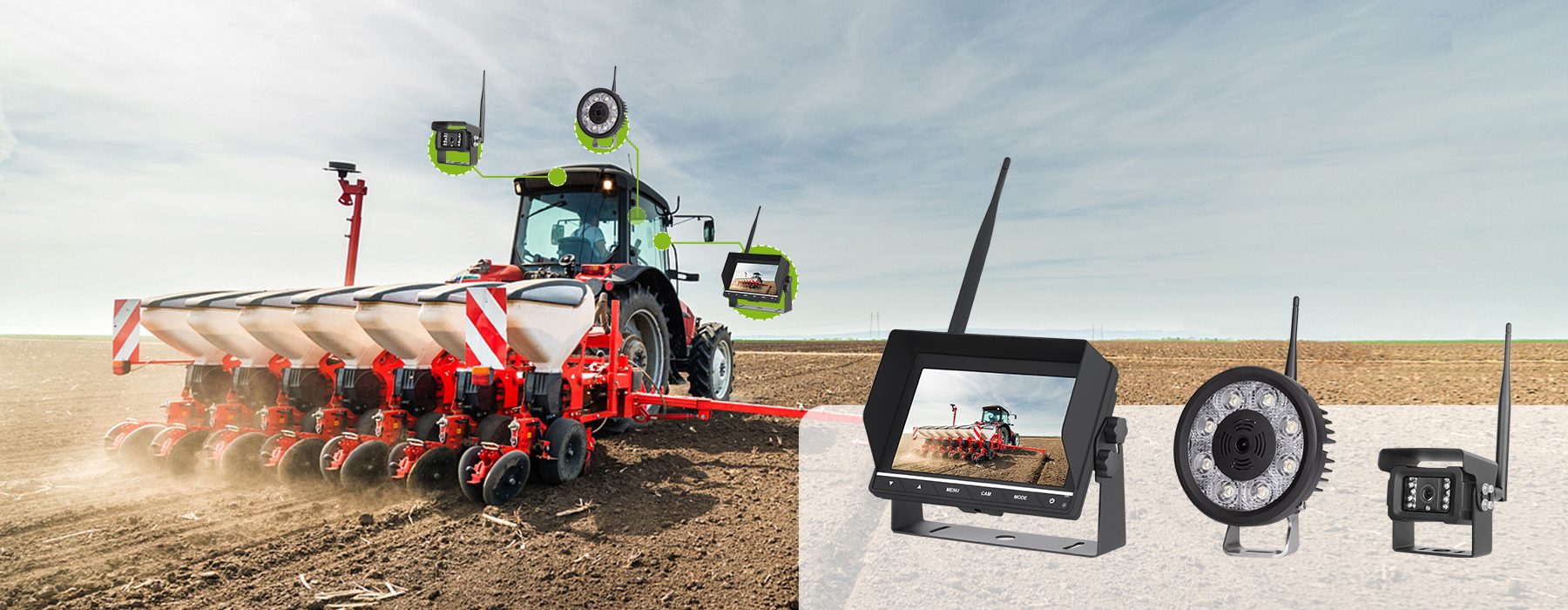
Long-haul trucking places extreme demands on every piece of equipment. Vibration, weather changes, long distances, and hours of continuous operation challenge even the most rugged electronics. Fleet managers often ask us whether a wireless backup camera can match the reliability of wired systems for cross-country routes. After deploying hundreds of wireless solutions across agricultural and commercial trucking fleets, we have a clear answer: yes—but only when the system is engineered for stability, range, and environmental toughness. The right kamyon arka görüş kamera sistemi eliminates wiring vulnerabilities without sacrificing signal integrity.

Is Wireless Backup Camera Reliable for Long Hauls?插图

Signal Stability Over Long Distances

The primary concern with any wireless solution is transmission dropouts. For long hauls, a camera that disconnects at highway speeds or in remote areas is useless. We have learned that reliable wireless backup camera systems must use robust transmission protocols. Luview’s 7-inch AHD night vision wireless camera system employs wireless 2.4GHz digital high-definition technology, delivering stable video signals with a transmission distance of up to 140 meters in open spaces. While a semi-truck is longer than 140 meters? No—but the real benefit is that the signal remains strong even when the tractor and trailer flex during turns. This extra range ensures consistent real-time monitoring, making this truck rear view camera system dependable for day-long hauls across state lines.

Durability for Continuous Operation

Reliability also means surviving vibration, temperature swings, and 12-24V electrical variations common in heavy trucks. A quality kamera si̇stem şi̇rketi̇ knows that long-haul vehicles require wide voltage design. Luview’s system supports 12V-24V input, adapting seamlessly to different truck electrical systems without voltage converters. Furthermore, the IP-rated construction (implied by agricultural-grade design) withstands dust and moisture. As a leading camera system company, we have seen wireless solutions fail when they lack proper environmental sealing. Our system, built for agricultural machinery, naturally handles the constant shaking and outdoor exposure of long-haul trucking.

Night Vision and Low-Light Performance

Long hauls do not stop at sunset. Drivers need reliable visibility during nighttime reversing, docking, or navigating poorly lit truck stops. The white LED full-color night vision feature ensures visibility even in low or no-light conditions, reducing the risk of accidents and significantly improving operational efficiency. Unlike infrared systems that show grainy black-and-white footage, full-color night vision gives drivers clearer situational awareness. For any truck rear view camera system, night reliability is non-negotiable, and wireless transmission does not compromise image quality here.

Why Wireless Can Outperform Wired

Wired systems have their own failure points: corroded connectors, chafed cables, and complex installation across long trailers. Wireless eliminates those risks. With a 1/2.9 CMOS sensor and 720P resolution, Luview’s system provides clear, real-time monitoring without the headache of running cables through axles and hitches. For fleets operating multiple trailers, wireless also enables quick camera swaps between vehicles.

The Verdict for Fleet Managers

Wireless backup cameras are absolutely reliable for long hauls when chosen from a proven camera system company that prioritizes transmission range, voltage flexibility, and night performance. Luview delivers exactly that. We recommend our truck rear view camera system because we have tested it across thousands of miles and harsh conditions. Let your fleet experience the freedom of wireless without compromising safety or dependability.

Should Commercial Fleets Adopt High-Resolution Automotive Camera Systems缩略图

Should Commercial Fleets Adopt High-Resolution Automotive Camera Systems

Rising safety expectations and increasing operational complexity are pushing fleet operators to rethink their vehicle monitoring strategies. For distributors and integrators working with trusted araç kamera üreti̇ci̇leri̇, the shift toward high-resolution systems is no longer optional but essential. A high-quality automotive dvr camera can significantly improve visibility, accountability, and overall fleet performance.

Should Commercial Fleets Adopt High-Resolution Automotive Camera Systems插图

Enhancing Safety Through Clear Visual Evidence

Accurate, high-resolution footage plays a vital role in improving road safety and reducing liability risks. Traditional low-resolution systems often fail to capture critical details such as license plates, driver behavior, or road conditions. By contrast, advanced solutions provided by experienced vehicle camera manufacturers deliver sharp and reliable imaging in diverse environments.

An automotive dvr camera with high resolution facilitates clear incident recording, making it easier for managers to analyze events that incidents are recorded with clarity, making it easier for fleet managers to analyze events and resolve disputes. This is particularly important for commercial fleets operating in high-traffic urban areas or under challenging weather conditions. Clear video evidence not only supports insurance claims but also strengthens compliance and driver accountability.

Improving Fleet Efficiency and Operational Insights

Beyond safety, high-resolution camera systems offer valuable insights into daily fleet operations. Partnering with innovative vehicle camera manufacturers allows businesses to access advanced features such as real-time monitoring, multi-channel recording, and integrated driver assistance technologies.

A modern automotive dvr camera can help identify inefficient driving habits, optimize routes, and reduce fuel consumption. Fleet managers gain actionable data that supports better decision-making and improves overall productivity. For B2B buyers, offering such intelligent solutions enhances product value and creates new opportunities in competitive markets.

Meeting Industry Standards and Customer Expectations

Commercial fleets are under growing pressure to comply with strict regulatory requirements and meet rising customer expectations. Working with certified vehicle camera manufacturers ensures that products meet international standards for quality and durability.

High-performance automotive dvr camera systems must undergo rigorous testing, including waterproofing, shock resistance, and extreme temperature validation. Certifications such as IATF 16949:2016, ISO9001:2015, and compliance with CE, FCC, EMARK, DOT, and SAE standards demonstrate a supplier’s commitment to quality and reliability. These credentials are critical for distributors seeking to build trust with their clients and expand into global markets.

Driving Long-Term Value with the Right Partner

Adopting high-resolution solutions is a strategic move for commercial fleets aiming to enhance safety, efficiency, and competitiveness. Choosing the right partner among vehicle camera manufacturers is equally important to ensure consistent performance and long-term success.

As Luview, we operate as a global car camera supplier with strong R&D, production, and quality control capabilities. Our products, including advanced automotive dvr camera systems, meet rigorous international certifications and testing standards. We also provide flexible OEM and ODM services, allowing partners to tailor solutions to specific market needs.

By collaborating with us, we enable businesses to deliver reliable, high-performance camera systems that meet evolving industry demands. We believe that partnering with Luview empowers our clients to stay ahead in the commercial fleet market while building sustainable growth.

Does a Radar Vehicle Detection System Improve Safety in Extreme Weather?缩略图

Does a Radar Vehicle Detection System Improve Safety in Extreme Weather?

Fleet managers who operate in regions with heavy fog, snow, rain, or dust know the frustration well. Standard vehicle cameras, no matter how high their resolution, lose effectiveness when visibility drops. We have heard from logistics companies and transit authorities asking the same question: can technology truly protect drivers when human eyes—and cameras—cannot see clearly? As experienced araç kamera üreti̇ci̇leri̇, we understand the limits of optical systems. That is why we have integrated radar vehicle detection systems into our portfolio. The short answer is yes, radar significantly improves safety in extreme weather. Let us explain why.

Does a Radar Vehicle Detection System Improve Safety in Extreme Weather?插图

How Radar Performs When Cameras Struggle

Optical cameras rely on visible light. In heavy snowfall, thick fog, or driving rain, light scatters and distorts. Even high-performance lenses produce unclear images. Radar, however, operates on radio waves that penetrate precipitation, dust, and darkness with minimal interference. A radar vehicle detection system continuously emits pulses and measures their return, creating a reliable map of nearby objects regardless of weather conditions. For a truck backing up in a blizzard or a bus navigating through dense fog, radar detects pedestrians, vehicles, and obstacles long before the driver—or a camera—could see them. As vehicle camera manufacturers who have tested both technologies side by side, we can confirm that radar maintains near-normal performance in conditions that render cameras virtually useless.

Complementing Vision with Detection

We do not suggest replacing cameras with radar. Instead, the most effective safety solution combines both. Cameras provide visual context that radar cannot—lane markings, road signs, and the nature of an obstacle (e.g., a child versus a cardboard box). Meanwhile, radar araç tespi̇t si̇stemleri̇ provide reliable presence and distance data in real time, triggering audio-visual alerts even when the camera feed is obscured. For blind-spot detection (BSD) and moving-off information systems (MOIS), radar excels precisely where optical systems fail. Many vehicle camera manufacturers now integrate radar into their advanced driver assistance systems (ADAS). At Luview, our radar vehicle detection solutions work alongside our camera systems to deliver 24/7 protection, regardless of whether the sun is shining or a storm is raging.

Why Fleets Operating in Harsh Climates Need Both

The data speaks clearly: collision rates spike during adverse weather. Relying solely on cameras or driver vision leaves a safety gap that radar uniquely fills. For fleets that run year-round in northern winters, coastal fogs, or desert dust storms, investing in radar vehicle detection systems is not an upgrade—it is a necessity. We have seen clients reduce low-speed backing accidents by over 60% after adding radar to their existing camera setups.

At Luview, we are proud to be among the few vehicle camera manufacturers that design and produce integrated camera-plus-radar safety systems. We recommend our radar vehicle detection solutions for any fleet facing extreme weather conditions. Contact us to learn how we can help you protect your drivers, your vehicles, and your reputation—in any forecast.

Kamyonlar Otomatik Şerit Değiştirme Asistanı ile Donatılmalı mı?

Kamyonlar Otomatik Şerit Değiştirme Asistanı ile Donatılmalı mı?

Growing road congestion and tighter safety regulations are pushing fleet operators to rethink how trucks handle lane changes. Human error remains a leading cause of accidents, particularly when large vehicles shift lanes with limited visibility. We increasingly see businesses evaluating whether an geli̇şmi̇ş kör nokta i̇zleme si̇stemi̇ combined with automatic lane change assist can significantly reduce risks and improve operational efficiency.

Should Trucks be Equipped with an Automatic Lane Change Assist?插图

Reducing Risk Through Intelligent Assistance

Lane changes are among the most dangerous maneuvers for heavy-duty trucks. Large blind spots and delayed driver reaction times often contribute to collisions with nearby vehicles. An advanced blind spot monitoring system plays a critical role by continuously scanning adjacent lanes and identifying potential hazards.

When paired with automatic lane change assist, the system goes further by actively supporting the driver during the maneuver. Instead of relying solely on visual checks, drivers receive real-time alerts and guidance. This combination minimizes uncertainty and helps prevent accidents before they occur. For fleet operators, adopting otomatik şerit değiştirme asistanı is not just a safety upgrade—it is a proactive risk management strategy.

Enhancing Performance in All Driving Conditions

Commercial fleets operate around the clock, often facing poor visibility conditions such as night driving, fog, or heavy rain. Traditional systems may struggle under these circumstances, but radar-based technologies maintain consistent performance.

An advanced blind spot monitoring system using millimeter-wave radar can detect objects regardless of lighting conditions. This enables that automatic lane change assist functions reliably even in low-light or nighttime environments. Continuous detection and accurate alerts provide drivers with confidence, allowing them to make safer decisions in complex scenarios. For businesses, this translates into fewer incidents and improved fleet uptime.

Improving Efficiency and Driver Confidence

Beyond safety, automatic lane change assist contributes to smoother and more efficient driving. Drivers supported by an advanced blind spot monitoring system experience less stress when navigating highways or congested urban roads.

By reducing the cognitive load on drivers, automatic lane change assist helps maintain consistent driving performance. This can lead to improved fuel efficiency, fewer abrupt maneuvers, and better overall fleet management. Companies that invest in these technologies often benefit from reduced insurance costs and enhanced brand reputation due to safer operations.

Moving Toward Smarter Fleet Safety Solutions

Equipping trucks with automatic lane change assist is becoming a practical necessity rather than a luxury. We believe that integrating an advanced blind spot monitoring system is a key step toward building safer, more efficient fleets.

As Luview, we offer the JY-PT10 system, which combines automatic lane change assist with a 77GHz millimeter-wave radar capable of detecting targets up to 50 meters. Our advanced blind spot monitoring system delivers precise, real-time alerts with primary and secondary warning signals, ensuring reliable performance even in challenging conditions. We are committed to providing our partners with intelligent safety solutions that enhance driver awareness, reduce risks, and support long-term operational success.

Can AI Camera Systems Proactively Prevent Accidents缩略图

Yapay Zeka Kamera Sistemleri Kazaları Proaktif Olarak Önleyebilir mi?

Filo güvenlik yöneticileri bize sürekli bu soruyu soruyor: Teknoloji bir kazayı gerçekleşmeden önce gerçekten durdurabilir mi? Yıllardır kameralar çarpışmaları olaydan sonra kaydediyordu. Şimdi, yapay zeka bu dinamiği tamamen değiştiriyor. Yeterince konuşlandırdık AI güvenlik kamera sistemleri Ticari filolar arasında güvenle cevap vermek için -evet, yapay zeka kazaları proaktif olarak önleyebilir, ancak yalnızca sistem gerçek zamanlı tehdit değerlendirmesi ve sürücü müdahalesi için tasarlandığında. Pasif kayıt ile aktif önleme arasındaki fark, donanıma yerleştirilen zekada yatmaktadır.

Can AI Camera Systems Proactively Prevent Accidents插图

Reaktif Kayıttan Aktif Uyarıya Geçiş

Geleneksel kameralar ne olduğunu yakalar. Yapay zekalı bir güvenlik kamerası sistemi, gerçekleşmek üzere olanları analiz eder. Luview'in BSIS ve MOIS sistemlerinde araç ve yaya algılamaya yönelik R151/R159 uyumlu yapay zeka kamera sistemi, hareketli yayaları ve araçları arka plandaki nesnelerden ayırt etmek için gelişmiş algoritmalar kullanır. Sistem, sürücüleri yanlış uyarılarla doldurmak yerine, yalnızca gerçek tehlikeler için hedefli uyarılar sunar. Bu proaktif özellik, sürücülere fren yapmak veya direksiyonu kırmak için fazladan bir saniye verir; bu da çoğu zaman kıl payı bir kaza ile maliyetli bir çarpışma arasındaki farkı belirler. Güvenilir Yapay zeka güvenlik kamerası şirketleri gerçek zamanlı nesne sınıflandırması ile tetiklenen görsel-işitsel uyarıların kalabalık yükleme alanlarında ve şehir sokaklarında tepki sürelerini yüzde 40'ın üzerinde azalttığını kanıtlamıştır.

Yapay Zeka Yüksek Riskli Senaryoları Nasıl Öngörüyor?

Kazaların önlenmesi, sürücünün kör noktalarının ve çevresel tehlikelerin öngörülmesini gerektirir. Luview AI sistemi R158/R159 yönetmeliklerine uygundur, yani ticari araç güvenliği için onaylanmıştır. Hassas yaya ve araç algılama özelliği, aynaların yetersiz kaldığı karmaşık ortamlarda bile sürekli çalışır. Örneğin, bir dönüş sırasında bir yaya kör noktaya girdiğinde, AI güvenlik kamerası sistemi hem görsel hem de sesli uyarıları anında tetikler. Bu proaktif uyarı, sürücünün duraklamasına veya rotasını ayarlamasına olanak tanır. Dahası, Wi-Fi özellikleri zahmetsiz kamera ayarları ve ürün yazılımı yükseltmeleri sağlar, böylece AI algoritması gelişen güvenlik standartlarıyla güncel kalır. Yapay zeka güvenlik kamerası şirketleri arasında, düzenli olarak yapılan kablosuz güncellemelerin, yeni araç türlerine ve çalışma koşullarına uyum sağlayarak önleme özelliklerini nasıl keskin tuttuğunu gördük.

Uyumluluk ve Özelleştirmenin Rolü

Proaktif kaza önleme sadece teknolojiyle ilgili değildir, aynı zamanda yasal zorunlulukları karşılamakla da ilgilidir. BSIS ve MOIS uyumluluğu, Luview'in yapay zeka güvenlik kamerası sistemlerinin yasal olarak etkili güvenlik araçları olarak tanınmasını sağlar. Ayrıca, araç türleri arasında uyarlanabilirlik, tek bir sistemin teslimat kamyonlarını, otobüsleri veya inşaat araçlarını koruyabileceği anlamına gelir. Belirli algılama bölgelerine veya uyarı hacimlerine ihtiyaç duyan iş ortakları için özelleştirilmiş çözümler sunarak proaktif önlemenin filo büyüklüğüne göre ölçeklendirilebileceğini kanıtladık.

Güvenlik Paradigmasının Değiştirilmesi

Artık kazaların kaçınılmaz olduğuna inanmıyoruz. Akıllı yapay zeka ile filolar kazalara müdahale etmekten kazalardan kaçınmaya geçebilir. Kanıtlar açık: İnsan ve araç algılamayı, görsel-işitsel uyarıları ve sorunsuz yükseltmeleri birleştiren yapay zeka güvenlik kamerası sistemleri her gün kazaları proaktif olarak önlüyor. Güvenilir küresel yapay zeka güvenlik kamerası şirketlerinden biri olan Luview, bu korumayı kutudan çıktığı gibi sunar. Tavsiye ediyoruz Luview Çünkü her yapay zekalı güvenlik kamerası sistemini pasif kayıt için değil, proaktif müdahale için tasarlıyoruz. Bir sonraki ramak kala olay bir tazminat talebine dönüşmeden önce filonuzun farkı deneyimlemesine izin verin.

Ticari Araç Yapay Zeka Kameraları Kör Nokta Güvenlik Tehlikelerini Nasıl Çözer?

Ticari Araç Yapay Zeka Kameraları Kör Nokta Güvenlik Tehlikelerini Nasıl Çözer?

Why Are Blind Spot Accidents Still Prevalent in the Commercial Vehicle Industry?

Most traffic accidents involving large commercial vehicles occur within a single second when vehicles enter the driver’s blind spots. A fully loaded heavy-duty truck has a blind spot area equivalent to the size of a standard classroom. Common risky scenarios, including pedestrians walking along the vehicle side, electric two-wheelers entering blind zones during right turns, and low-visibility riders traveling at night, result in countless preventable traffic accidents every year.

Traditional rear view mirrors and standard vehicle cameras only record footage for post-event evidence collection. They cannot predict potential hazards or deliver active real-time warnings, failing to resolve blind spot safety risks during vehicle operation.

To address the long-standing blind spot safety pain points in the commercial vehicle sector, Luview launches the JY-6734 AI intelligent camera. Eliminating the core limitation of conventional monitoring devices that only record without alerting, this system supports intelligent environment perception, independent risk judgment, and instant on-site alarms. It upgrades passive video monitoring to active safety defense, gaining critical reaction time for drivers to avoid collisions and dangers.

I. Industrial-Grade AI Vision Terminal Built for Commercial Vehicles

The JY-6734 AI camera is a professional AI perception device tailored for commercial vehicle active safety scenarios. It is fully compatible with M2, M3, N2, and N3 mainstream commercial vehicles, and also applicable to passenger cars, engineering vehicles, and other vehicle models for versatile application scenarios.

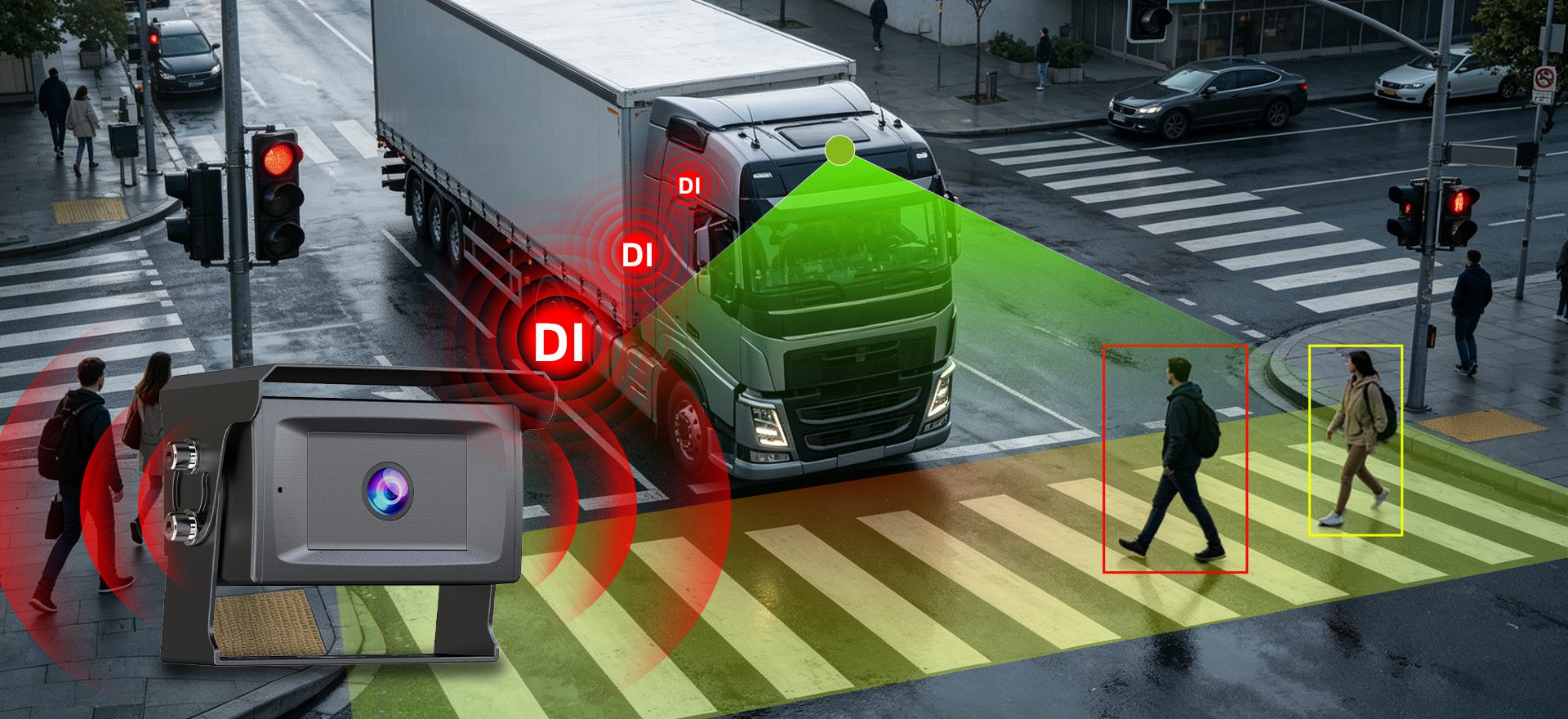
How Do Commercial Vehicle AI Cameras Solve Blind Spot Safety Hazards?插图

Featuring an IP69K industrial-grade waterproof rating, the device resists high-pressure water washing, heavy rain, and harsh outdoor working conditions. It maintains stable operation during daily vehicle cleaning and extreme rainy and snowy weather.

Industrial-Grade Environmental Adaptation Parameters

Operating Temperature: -20℃ ~ +70℃

Storage Temperature: -30℃ ~ +80℃

Maximum Tolerable Humidity: 95%

II. Targeted Solutions for Core Blind Spot Safety Risks

1. Offline Edge AI Computing for Stable Recognition in Complex Road Conditions

Powered by the RV1126B main control chip, the device delivers 3.0 TOPS high-performance local edge computing. All pedestrian recognition, vehicle detection, and risk analysis are completed locally offline without network or cloud server reliance. This completely solves the industry pain point of failed AI functions under weak or zero network signals, ensuring stable and reliable performance in all road and working scenarios.

2. Proactive AI Pre-Warning Realizes Pre-emptive Hazard Avoidance

The camera accurately identifies pedestrians, non-motor vehicles, and passing vehicles within customized monitoring areas and triggers instant alarm prompts once risks are detected. It thoroughly transforms the traditional passive post-event review mode and realizes effective pre-active safety protection.

It perfectly adapts to three major high-frequency and high-risk working scenarios:

① Heavy-duty truck full blind spot coverage: Makes up for the defects of traditional rear view mirrors and fully covers the 6-meter super-long right-side blind spots of heavy trucks;

② Construction and warehouse safety protection: Adapts to dense personnel and forklift operation scenarios with customizable warning zones to prevent workplace collision accidents;

③ Bus right-turn safety protection: Precisely detects pedestrians and riders within the vehicle’s right-turn trajectory to avoid crushing accidents.

3. Customizable Parameters Reduce Fleet Adaptation and Operation Costs

Unlike ordinary cameras with fixed and non-adjustable algorithms on the market, the JY-6734 AI camera supports independent configuration of detection objects, warning areas, and alarm sensitivity. Matched with universal Android and iOS mobile APPs, calibration and parameter debugging can be completed without professional tools or on-site technicians. This greatly reduces the technical threshold and operation and maintenance costs for fleet modification and large-scale batch deployment.

III. Why This AI Camera Is More Suitable for Fleet Operation and Commercial Refitting

1. High-Integration Design with Excellent Cost Performance

This all-in-one terminal integrates 3.0 TOPS edge AI computing power, 1080P high-definition imaging, IP69K waterproof performance, ultra-wide viewing angle, and CAN bus communication technology. With high functional integration and stable industrial-grade performance, it precisely matches the active safety demands of commercial vehicles and delivers outstanding cost advantages over peer products.

2. Reduce Fleet Operational Risks and Comprehensive Costs

Compatible with logistics heavy trucks, urban buses, engineering vehicles, and other mainstream commercial models, the system effectively reduces blind spot collision rates through active early warning mechanisms. It helps enterprises cut comprehensive operating losses caused by traffic accidents, including compensation fees, increased insurance premiums, and vehicle downtime losses.

3. Simple Deployment Suitable for Large-Scale Fleet Upgrading and OEM Matching

With standardized installation procedures and self-service mobile debugging functions, the device eliminates the need for professional on-site technical support. It simplifies the overall deployment process, shortens project implementation cycles, and is highly suitable for large-scale fleet renovation and original equipment manufacturer supporting installation.

SSS

Q1: What types of commercial vehicles can the JY-6734-AI camera adapt to?

A: This AI camera is fully compatible with M2, M3, N2 and N3 standard commercial vehicles, including heavy trucks, passenger buses and various engineering vehicles. It also supports installation on ordinary passenger cars.

Q2: Does the JY-6734-AI camera need network access to run AI recognition and warning functions?

A: No network or cloud service is required. Built with self-developed edge computing power, the camera independently executes pedestrian, vehicle identification and risk warning offline, suited for outdoor sites, construction areas and long-distance transport with weak or no network signals.

Q3: Can users customize warning zones and alarm sensitivity of this AI camera per actual operation scenarios?

A: Yes. Users can divide monitoring areas, adjust alarm sensitivity and set identification targets freely through the exclusive mobile APP, satisfying personalized safety requirements of different vehicles and road conditions.

Q4: How is the environmental adaptability and protection grade of this AI camera for long-term outdoor work?

A: The AI camera reaches IP69K industrial waterproof and dustproof standard, standing up to high-pressure washing, heavy rain and sandstorm. It operates steadily within -20℃ to 70℃, adapting to harsh outdoor environments of extreme temperature and high humidity for all-weather long-term operation.

Q5: What complete vehicle safety monitoring solutions can this AI camera form when matched with vehicle displays?

A: Paired with Luview dedicated vehicle monitors, it can build professional BSD blind spot monitoring system and 360° AVM panoramic view system, providing comprehensive visual protection and forming complete active safety solutions for commercial vehicles.